
Views: 222 Author: Leah Publish Time: 2025-11-29 Origin: Site


Content Menu
● What Makes Automatic OTF Knives Unique
● The Role of a Professional OEM Automatic OTF Knife Factory
● Understanding the Internal Mechanism
● Key Quality Indicators in Automatic OTF Knife Manufacturing
● Materials and Heat Treatment for Automatic OTF Knives
● The Manufacturing Process: From Design to Assembly
● Production Capacity and Lead Time Management
● Communication, Project Management, and After‑Sales Support
● Compliance, Safety, and Market Regulations
● Pricing, Cost Structure, and Value
● Questions to Ask a Potential Automatic OTF Knife Manufacturer
● Common Red Flags When Choosing an Automatic OTF Knife OEM
● Building a Long‑Term Partnership
● FAQ
>> 1) Why are Automatic OTF Knives more demanding to manufacture than normal folding knives?
>> 2) How can I quickly judge whether a factory truly understands Automatic OTF Knives?
>> 3) What minimum order quantity should I expect for OEM Automatic OTF Knives?
>> 4) How often should an Automatic OTF Knife design be updated?
>> 5) What can I do if my current Automatic OTF Knife supplier has quality or delivery problems?
Automatic OTF Knives have become a core product category for outdoor, tactical, and EDC brands, so choosing a reliable manufacturer is one of the most important decisions you will make. A strong OEM partner protects your brand reputation, keeps your supply chain stable, and helps you launch competitive Automatic OTF Knife lines year after year.
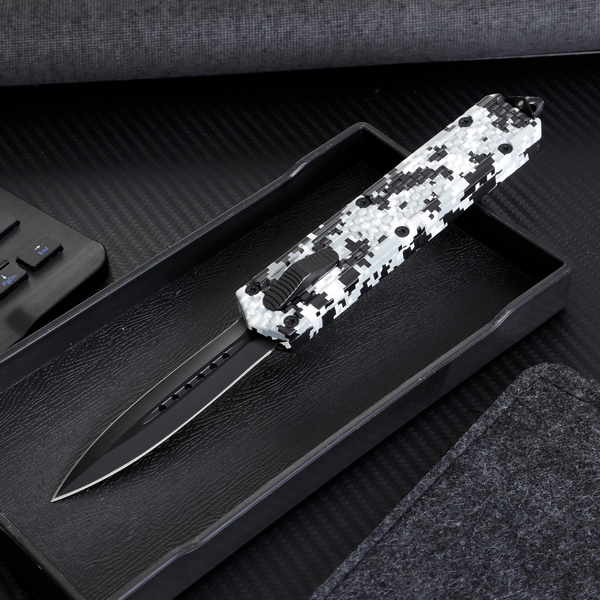
Automatic OTF Knives are different from ordinary folding knives because the blade slides straight out of the front of the handle, driven by an internal spring and controlled by a button or thumb slider. This design allows ultra‑fast one‑hand deployment while keeping the knife slim and easy to carry. For many users—law enforcement, military, rescue teams, and serious outdoor enthusiasts—an Automatic OTF Knife is not just a tool but a piece of precision equipment that must work every single time.
From a manufacturer's perspective, this means tolerances, materials, and assembly quality must be much higher than with simple slipjoint or liner‑lock folders. A single error in machining or heat treatment can cause an Automatic OTF Knife to misfire, fail to lock, or develop blade play. That is why brands looking for an OEM partner must evaluate Automatic OTF Knife factories more carefully than generic knife suppliers.
A professional OEM factory for Automatic OTF Knives does far more than just cut and assemble parts. It works as an extension of your own brand, transforming your concept into a reliable, repeatable product that meets your target market's expectations.
A capable OEM Automatic OTF Knife partner typically offers:
- Product design translation from sketches or CAD into manufacturable drawings for blades, handles, and internal components.
- Engineering support to adapt your Automatic OTF Knife concept to mass production while preserving performance and aesthetics.
- Rapid prototyping so you can test action, ergonomics, and visual style before committing to full tooling and production.
- Stable mass production with consistent quality from the first batch of Automatic OTF Knives to ongoing reorder cycles.
By collaborating closely with such a factory, overseas brands, wholesalers, and distributors can significantly shorten development cycles and launch multiple Automatic OTF Knife series faster.
To judge whether a factory truly understands Automatic OTF Knives, you should also understand the basics of how the mechanism works. Inside a typical double‑action Automatic OTF Knife, the core elements are:
- A spring assembly that stores mechanical energy for both deployment and retraction.
- A blade with a stop pin or similar feature that rides in a machined track inside the handle.
- Front and rear locking elements (latches or catches) that secure the blade in open and closed positions.
- A slider or button that connects to a plate or linkage, synchronizing movement of the locks and spring.
When the slider is pushed forward on a double‑action Automatic OTF Knife, it adds tension to the spring and releases the rear lock so the blade can travel forward along its track until the front lock engages. When the slider is pulled back, the reverse happens: the front lock is released, the spring stores and redirects energy, and the blade retracts into the handle. This cycle only works smoothly if machining, heat treatment, and assembly are all executed with high precision.
The first thing to verify in any Automatic OTF Knife factory is the quality system. Because the mechanism is complex, strict control is required at each stage.
Look for these indicators:
- Incoming material control: The factory checks certificates for blade steels, springs, and handle materials and verifies hardness and composition.
- In‑process inspections: Critical dimensions for blade tracks, lock interfaces, and spring pockets are measured during machining, not just at the end.
- Pilot run validation: Before full production of a new Automatic OTF Knife model, the factory runs a pilot batch to confirm fit, lockup, deployment speed, and long‑term durability.
- Lifecycle and abuse testing: Automatic OTF Knives should be cycled thousands of times to ensure the spring, lock, and track system maintain performance under realistic use conditions.
If a factory can clearly explain these procedures and show you sample reports or checklists (even with sensitive data hidden), it is a strong sign that they understand the demands of Automatic OTF Knife manufacturing.
Materials and heat treatment are central to a successful Automatic OTF Knife line. A reliable manufacturer typically works with a range of blade steels, including mid‑range stainless steels and higher‑end tool or powder steels, and has proven heat‑treat recipes for each.
When evaluating material capability, pay attention to:
- Blade steels: Ask which steels they commonly use for Automatic OTF Knives and what hardness range they target for each. Look for a balance between edge retention, toughness, and corrosion resistance.
- Handle materials: Many Automatic OTF Knives rely on aluminum alloys, stainless steel, titanium, or reinforced composites. The factory should be comfortable machining and finishing these materials with tight tolerances.
- Springs and internal components: Springs must be made from appropriate alloys with reliable fatigue life, and the internal followers and plates must resist wear and deformation.
An experienced Automatic OTF Knife OEM can advise you on which combination of blade steel, handle material, and surface finishing will match your market's expectations and your target price point.
The process for creating an Automatic OTF Knife generally includes the following stages:
1) Design and engineering
Your brand provides a design brief with size, style, target use scenario, and price level. The factory's engineers create detailed 3D models and technical drawings for the handle, blade, springs, and internal components. For Automatic OTF Knives, this stage often involves multiple rounds of adjustment to get the action, lockup, and ergonomics just right.
2) Prototyping and functional testing
The factory produces prototype Automatic OTF Knives using CNC machining, laser cutting, and basic finishing. These samples are tested for deployment speed, lock strength, blade alignment, and overall feel. The goal is to confirm that the knife can be manufactured consistently while still meeting your brand's standards.
3) Tooling and fixture development
Once the design is validated, the manufacturer builds dedicated fixtures, jigs, and programs for large‑scale machining of handles, blades, and internal parts. Because Automatic OTF Knives require extremely precise tracks and pockets, tooling design has a big influence on long‑term consistency.
4) Mass production
In mass production, handle scales, blades, and internal parts are produced in batches. After machining, parts undergo deburring, tumbling, surface treatment (such as anodizing or coating), and marking. Components are then assembled, adjusted, and inspected by trained technicians. Automatic OTF Knives are often hand‑tuned at the end to achieve the best possible action.
5) Final inspection and packaging
Each batch of Automatic OTF Knives should pass through final inspections for cosmetic defects, mechanical reliability, locking performance, and safety. Only after passing these checks do knives go into branded packaging and shipping cartons for overseas delivery.
Factories that can clearly walk you through these steps, with Automatic OTF Knife‑specific details, are generally safer partners than those that offer only generic descriptions.
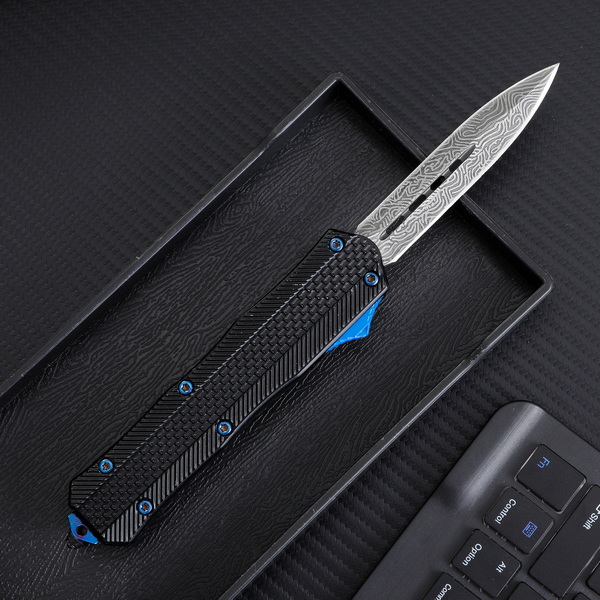
Beyond quality, production capacity is essential for keeping your brand competitive. If a manufacturer cannot deliver enough Automatic OTF Knives on time, you will lose sales and damage relationships with distributors and retailers.
When you evaluate capacity, ask the factory:
- What is the monthly or quarterly output for Automatic OTF Knife models similar to yours?
- How many CNC machines and assembly lines are dedicated to knives, and can they increase capacity during peak seasons?
- What are typical lead times for sample, first production, and reorder phases?
- How do they manage rush orders or unexpected demand for a successful Automatic OTF Knife model?
A reliable Automatic OTF Knife manufacturer offers realistic timelines and avoids promising impossibly short lead times just to win your business.
Even the most advanced Automatic OTF Knife factory will struggle to deliver good results without smooth communication. Clear, fast, and honest communication is a hallmark of a reliable OEM partner.
Important aspects include:
- Dedicated contact window: Ideally, you will work with a project manager who understands knife terminology, export requirements, and your target market.
- Regular updates: Throughout development and production, your contact should provide timely reports, photos, and explanations of any changes related to your Automatic OTF Knife project.
- Documentation: Drawings, specifications, change records, and QC reports should be organized and accessible so that both sides share the same understanding.
- After‑sales support: The factory should have a clear policy for handling defective Automatic OTF Knife units, warranty issues, and feedback from your market.
When communication runs smoothly, you can adjust designs, resolve issues early, and plan new Automatic OTF Knife series with confidence.
Because Automatic OTF Knives are automatic, many markets treat them differently from non‑automatic or manual folders. A responsible OEM partner will help you reduce legal risks by offering compliant configurations and documentation.
Points to discuss:
- Blade length and mechanism variations that may better fit the regulations in your destination countries.
- Safe design features such as reliable locking, controlled deployment force, and minimized risk of accidental activation.
- Labeling and packaging that accurately describes the Automatic OTF Knife and supports your brand's compliance efforts.
Although legal responsibility ultimately rests with the brand, a knowledgeable manufacturer with experience in exporting Automatic OTF Knives to multiple regions can provide practical guidance.
Price is always important, but an Automatic OTF Knife is a precision tool, and cutting costs too aggressively often results in serious quality problems. Instead of chasing the lowest price, evaluate the overall value the factory delivers.
A transparent factory will:
- Provide detailed quotations for each Automatic OTF Knife model, breaking down major cost drivers such as material choices, coatings, and accessories.
- Explain how changes in blade steel, handle material, surface finish, or packaging affect cost.
- Offer suggestions to optimize your Automatic OTF Knife design so you can reach a target price without sacrificing reliability and safety.
Over time, a high‑value OEM relationship can reduce warranty costs, minimize returns, and help you build a strong reputation in the Automatic OTF Knife market.
To compare different factories, you can prepare a structured list of questions focused specifically on Automatic OTF Knives:
- How many years have you specialized in outdoor and Automatic OTF Knife production?
- What are your main export markets, and which brands do you serve (without breaking NDAs)?
- How do you test deployment reliability and lock strength in Automatic OTF Knives?
- What is your typical defect rate, and how do you handle continuous improvement?
- What is the minimum order quantity for a new Automatic OTF Knife design, and for customized colors, logos, or blade profiles?
- Can you support custom packaging, laser engraving, or serial number tracking for our Automatic OTF Knife lines?
Factories that answer these questions clearly and confidently usually have a real system behind their promises.
While many factories can show you attractive samples, not all are trustworthy long‑term partners. Watch out for these warning signs:
- Very low initial pricing for Automatic OTF Knives without a clear explanation, especially if metal and labor costs seem unrealistic.
- Vague technical answers about mechanism details, tolerances, or testing procedures.
- Unwillingness to provide test reports, even sanitized ones, for Automatic OTF Knife reliability and safety.
- Poor responsiveness to emails or messages, frequent delays in sample delivery, or unexplained changes in specifications.
- Overly aggressive promises on delivery time and capacity for a new Automatic OTF Knife project with no track record.
If you experience several of these issues during the early negotiation phase, it is usually better to continue your search.
The best results come when you treat your Automatic OTF Knife OEM not just as a supplier but as a strategic partner. By sharing your long‑term product roadmap, target market, and brand story, you enable the factory to propose better technical solutions and new Automatic OTF Knife ideas.
Over time, a strong partnership can bring:
- Co‑developed limited editions and exclusive Automatic OTF Knife models for different regions.
- Ongoing design refreshes that keep your catalog competitive with new blade shapes, handle patterns, and mechanism refinements.
- Improved cost structure through continuous process optimization, automation, and material negotiation.
- Stronger brand loyalty as your Automatic OTF Knives earn a reputation for consistent quality and performance.
For Outdoor, tactical, and EDC brands, this kind of long‑term, high‑trust relationship can be a powerful competitive advantage.
Finding a reliable Automatic OTF Knife manufacturer is a strategic decision that affects every part of your business, from product quality and safety to delivery performance and brand reputation. By understanding the unique mechanical demands of Automatic OTF Knives and carefully evaluating quality systems, material capabilities, production capacity, communication style, compliance awareness, and pricing transparency, you can identify OEM partners who are truly ready to support your growth. When you choose a professional Automatic OTF Knife factory and build a long‑term partnership, you gain not only a production source but also a technical ally that helps you create durable, high‑performance knives your customers trust.
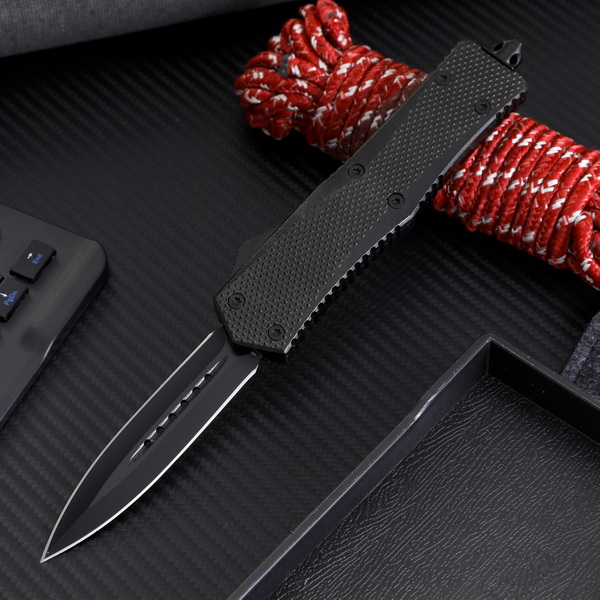
Automatic OTF Knives rely on a spring‑driven blade that travels in a straight track and locks securely at both open and closed positions, so any small error in machining or assembly can cause misfires or blade play. The combination of complex internal parts, tight tolerances, and safety requirements makes Automatic OTF Knives more challenging to produce than conventional folders.
Ask the factory to explain in detail how they design, machine, and test the internal mechanism, including spring selection, track tolerances, lock geometry, and cycle testing. A manufacturer with deep Automatic OTF Knife experience can answer these questions clearly and offer practical suggestions to improve your design.
Minimum order quantities vary by factory and by model, but you should expect a basic MOQ per color or configuration to cover setup costs for materials, machining, and finishing. Many brands start with a moderate first order of Automatic OTF Knives to test the market, and then increase volume once the design proves successful.
There is no fixed rule, but many brands refresh their Automatic OTF Knife lines every one to three years by updating blade shapes, handle textures, colors, or internal improvements. Working closely with your OEM partner helps you track user feedback and plan upgrades that keep your knives competitive while maintaining compatibility with existing tooling when possible.
If you face recurring defects, delayed shipments, or poor communication, start by documenting the issues and requesting a corrective action plan. If problems continue, it may be time to benchmark new Automatic OTF Knife manufacturers, share your existing design and requirements, and request trial batches so you can transition smoothly to a more reliable OEM partner.
[1](https://www.youtube.com/watch?v=EwG2oytZCl8)
[2](https://www.youtube.com/watch?v=_TEVM4NAlxk)
[3](https://www.youtube.com/watch?v=krPPEd3X1sM)
[4](https://www.youtube.com/watch?v=pAYLfzSzWdw)
[5](https://nobliecustomknives.com/what-is-an-otf-knife-and-how-does-an-otf-knife-work/)
[6](https://www.youtube.com/watch?v=WH-tXXd3pG8)
[7](https://eknives.com/blog/microtech-knives-manufacturing-process/)
[8](https://tacknivesusa.com/how-does-an-otf-knife-work/)
[9](https://knifedogs.com/threads/sr1-scale-release-automatic-build-tutorial.52152/)
[10](https://www.youtube.com/watch?v=s0mx_j5ihJg)


