
Views: 222 Author: Leah Publish Time: 2025-10-18 Origin: Site


Content Menu
● What is a Heavy-Duty OTF Knife?
● Importance of Safety in Heavy-Duty OTF Knives
● Key Safety Features of Modern Heavy-Duty OTF Knives
>> Dual-Action Deployment with Safety Locks
>> Ergonomics and Non-Slip Grip Textures
>> Quality Blade Materials and Strong Blade Locks
>> Safety Switch and Button Coverings
● Additional Safety Considerations for Heavy-Duty OTF Knives
>> Balanced Weight and Handling
>> User Training and Awareness
● How to Safely Use Your Heavy-Duty OTF Knife
● Maintenance Tips to Preserve Safety Features
>> 1. What makes a heavy-duty OTF knife different from regular knives?
>> 2. Are OTF knives legal to carry and use?
>> 3. How do safety locks on OTF knives work?
>> 4. Can I use a heavy-duty OTF knife for survival tasks?
>> 5. What maintenance is required for OTF knives?
Outdoor enthusiasts, tactical professionals, and everyday users increasingly rely on Heavy-Duty OTF Knives for their versatility, strength, and quick deployment. As these knives become tougher and more powerful, understanding their key safety features is critical to prevent accidents and maximize their reliability.
This article explores the essential safety mechanisms integrated into modern heavy-duty OTF knives, reviews their benefits, and guides users on how to handle them safely.
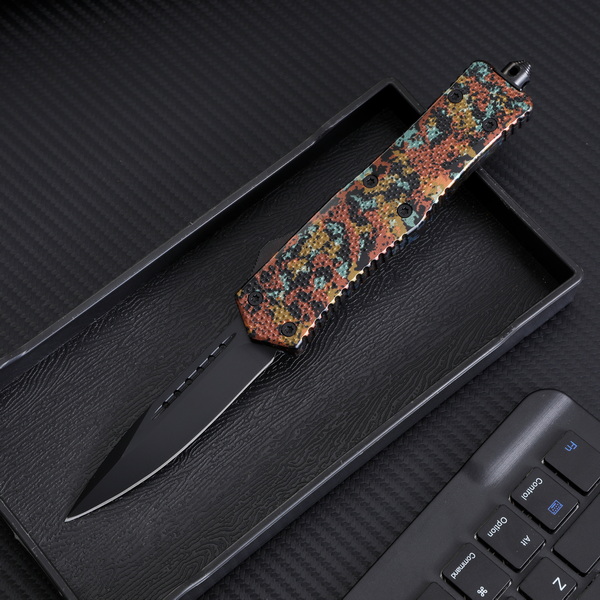
A Heavy-Duty OTF Knife refers to an "Out-The-Front" automatic knife designed for rigorous tasks. Unlike traditional folding knives that pivot from the side, OTF knives have blades that slide straight out from the handle's front. Their robust construction suits demanding environments, from outdoor adventures to tactical situations.
These knives stand out because of their swift blade deployment and retraction, making them excellent tools for emergency scenarios, rescue operations, and tough outdoor activities such as camping and hunting. Their design allows for one-handed operation, which significantly improves efficiency when immediate access to a blade is necessary.
Due to their automatic deployment and powerful blades, improper handling of these knives can lead to serious injuries. Manufacturers prioritize safety to ensure users can deploy, lock, and retract the blade without risks. Modern designs feature multiple safety mechanisms, reducing accidental openings and blade failures.
Because heavy-duty OTF knives are engineered for tough usage and fast blade access, safety protocols incorporated into their design are essential. Users need to respect these safety features and combine them with careful handling habits to minimize chances of injury. Moreover, safe storage and maintenance practices enhance the overall reliability of these knives.
Modern heavy-duty OTF knives usually offer dual-action deployment, meaning the blade both extends and retracts automatically via a sliding switch or button. This mechanism is paired with a safety lock that prevents the blade from accidentally sliding out during storage or handling.
The locking system requires deliberate pressure to engage, avoiding unintended blade activation. Without this safety lock, the blade could accidentally deploy in a pocket or bag, posing a significant hazard. Some models incorporate a secondary lock or a detent system that adds an extra layer of security during transport or when not in use. This ensures the blade stays securely housed in the handle until intentionally activated.
A crucial feature on heavy-duty OTF knives is a blade retention system designed to hold the blade securely inside the handle when retracted and firmly when extended.
Retention systems often consist of springs, locking pins, or catches within the knife mechanism to maintain blade stability during use. These components prevent blade wobble, which can not only damage the blade but also endanger the user by causing unpredictable blade movement. High-quality springs and internal locking pins withstand heavy use and vibration without compromising stability.
Blade retention also prevents blades from falling back into the handle unexpectedly, which could cause injury. The integrity of this system is critical because a compromised retention system can render a heavy-duty OTF knife unsafe for high-strain tasks.
Many heavy-duty OTF knives are built with ergonomic handle designs and non-slip textures to ensure a firm grip even in wet or slippery conditions, reducing the risk of slippage and accidental cuts.
The handle materials used include high-grade polymers, G10 composites, or rubberized coatings, which enhance grip under adverse conditions like rain, sweat, or oil exposure during tactical operation or outdoor survival use. Some heavy-duty OTF knives also feature finger grooves or contours that naturally fit the hand, preventing hand fatigue and increasing control over the blade deployment and usage.
When the handle offers a secure, comfortable grip, the chances of accidental slips that could cause injury drop significantly. This design consideration is especially important during intense or prolonged use where precision and control are paramount.
Heavy-duty use demands blades made from premium materials like S30V, CPM-S35VN, or high-carbon stainless steel, which are known for excellent edge retention, toughness, and corrosion resistance. These materials hold sharp edges longer and withstand aggressive use without chipping or bending.
Modern heavy-duty OTF knives integrate robust blade locks that hold the blade securely open during use. This prevents the blade from collapsing unexpectedly, a dangerous fault in a high-intensity situation. The lock mechanism typically engages automatically when the blade reaches full extension.
The combination of high-quality blade steel and a reliable locking mechanism ensures the knife performs safely under pressure, whether cutting tough materials, self-defense, or survival tasks.
Another key safety feature involves recessed or guarded switches and buttons that reduce accidental blade activation when the knife is carried in pockets, backpacks, or tool kits.
These safety switches usually require intentional sliding or pressing to deploy the blade. Protective coverings or subtle switch placement prevent inadvertent contact with the blade release mechanism. This is crucial for everyday carry, where accidental openings could lead to damage or injuries.
Some knives feature additional deterrents, such as requiring the user to slide and hold the button momentarily before the blade extends, adding an intentional step to activation. This helps prevent blade deployment from being triggered by incidental bumps or pressure.
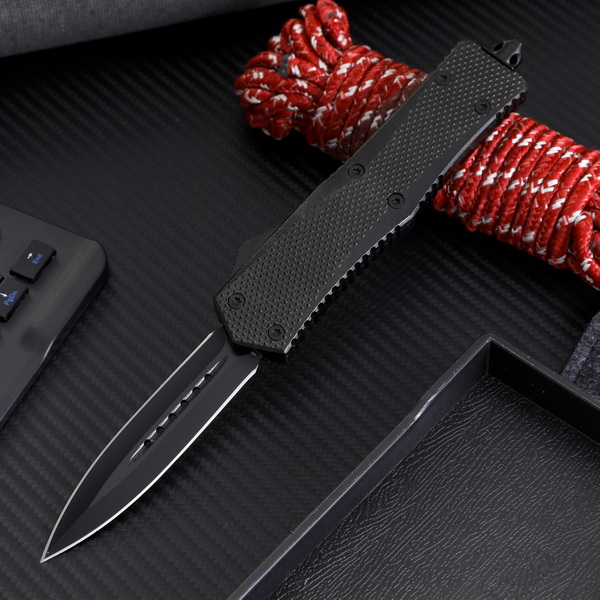
A well-balanced knife reduces the risk of accidental drops or misdirected cuts. Modern heavy-duty OTF knives balance weight distribution between blade and handle to improve handling and user control. Excessive weight in one area can cause fatigue and unsteady handling, increasing the risk of accidents.
Users should seek knives that fit their hand size and strength to maximize control and safety when deploying and maneuvering the blade.
Some models incorporate visual indicators to show whether the blade is extended or retracted. A visible blade status helps users avoid accidental blade exposure when handling or storing the knife.
This visual confirmation feature contributes an added layer of safety by allowing quick verification of the blade's position, especially in low-light or high-stress environments.
Many manufacturers offer dedicated sheathes, cases, or clips designed to house heavy-duty OTF knives securely while protecting the blade and preventing accidental deployment.
Proper storage is an essential aspect of overall safety. Carrying the knife in a dedicated sheath, or using pocket clips that secure the knife firmly, reduces accidental opening risks, protects the blade edge, and safeguards the user and others nearby.
No safety feature can replace proper user knowledge. Knife users should familiarize themselves with the specific deployment mechanisms, locks, and maintenance recommended by the manufacturer.
Understanding how to properly engage safety systems, deploy the blade deliberately, and maintain the knife reduces accidents and increases its lifespan. Training users to recognize wear signs and perform routine inspections further guarantees safe operation.
- Always inspect the knife to confirm safety locks and blade retention before use.
- Deploy the blade deliberately using the designated switch or button and avoid force.
- Maintain a secure grip with the non-slip handle to prevent slips.
- Keep fingers and body parts clear of the blade path during opening and closing.
- Store the knife in sheath or protective cases when idle to prevent accidental openings.
- Avoid using the knife beyond its intended purpose to prevent damage or injury.
- Follow manufacturer maintenance instructions for cleaning and lubrication to keep safety features functional.
- Regularly clean the blade and internal mechanism to avoid dirt buildup that could impair locking or deployment.
- Lubricate moving parts lightly with recommended oils to ensure smooth operation.
- Inspect springs, locks, and switches for signs of wear or damage before use.
- Replace worn or broken parts promptly to maintain knife integrity.
- Store the knife in a dry environment to prevent corrosion of metal components.
- Avoid harsh chemicals that could degrade handle materials or internal parts.
Routine maintenance directly supports the knife's safety by keeping all features responsive, secure, and reliable.
Modern heavy-duty OTF knives combine powerful blades with essential safety features to deliver robust, reliable tools for demanding users. Dual-action deployment with safety locks, secure blade retention, ergonomic grips, and quality materials all work together to ensure safe handling in any situation. Additional safety elements such as guarded switches, balanced design, visible blade indicators, and proper storage enhance user security. By using, maintaining, and storing these knives responsibly, owners can enjoy peak performance with minimized risk of injury.
Heavy-duty OTF knives are exceptional tools, but their safety depends on both engineering excellence and conscious user awareness.
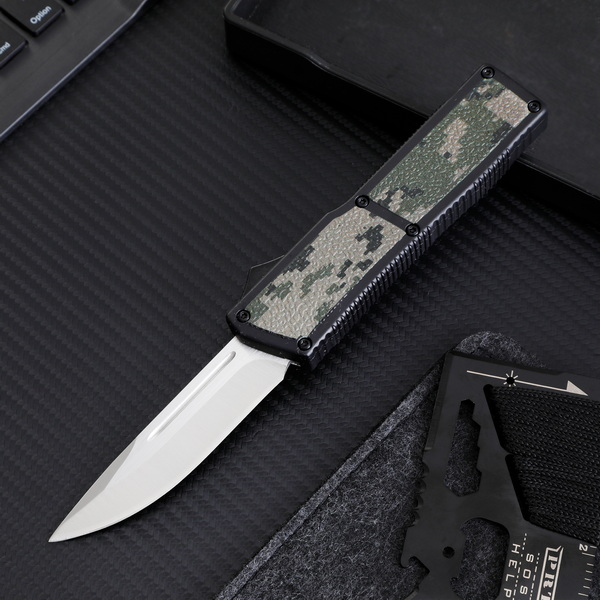
Heavy-duty OTF knives deploy blades straight out of the front automatically, built with more robust components for intense use compared to traditional folding knives. Their quick, one-handed deployment suits emergency and tactical scenarios.
Legality varies by country and state. Always check local laws regarding automatic knives and carry restrictions before purchasing or transporting an OTF knife.
Safety locks prevent accidental blade activation. They typically require deliberate sliding or pressing of a button or switch to disengage before the blade can deploy, safeguarding users from unintentional openings.
Yes, these knives are designed for tough conditions including cutting, slicing, and survival situations due to their durability and quick deployment capabilities.
Regular cleaning, lubrication, and inspection of springs and locks keep the knife functioning safely. Avoid harsh chemicals and store it dry to maintain optimal performance and safety.


