
Views: 222 Author: Leah Publish Time: 2025-11-03 Origin: Site


Content Menu
● What defines Tactical OTF Knives?
>> Deployment and retraction mechanisms
● What characterizes Switchblades?
● Practical comparisons: usability, safety, and field performance
>> Blade geometry and task fit
● Materials and manufacturing for OEM partners
● Design considerations for brands and retailers
● Legal and regulatory landscape
● FAQ
>> 1. What exactly are Tactical OTF Knives?
>> 2. How do Tactical OTF Knives differ from traditional switchblades?
>> 3. Are Tactical OTF Knives legal to own and carry worldwide?
>> 4. Can Tactical OTF Knives be customized through OEM services?
>> 5. What makes Tactical OTF Knives particularly suitable for tactical use?
Tactical OTF Knives sit at the intersection of advanced engineering, outdoor practicality, and the evolving needs of professionals who demand speed, reliability, and ergonomics from their cutting tools. While the term “switchblade” often appears in conversation and media, a more precise understanding reveals nuanced differences between Tactical OTF Knives and traditional switchblades. This article delves into mechanism, design philosophy, material science, application contexts, manufacturing considerations, and the regulatory landscape relevant to OEM manufacturers serving international brands, wholesalers, and production partners. Throughout, the focus remains on how Tactical OTF Knives compare to switchblades in real-world scenarios, why the choice matters for brand positioning, and how OEM capabilities in China empower global clients to meet diverse market requirements with quality, safety, and compliance in mind.[1][4][10]
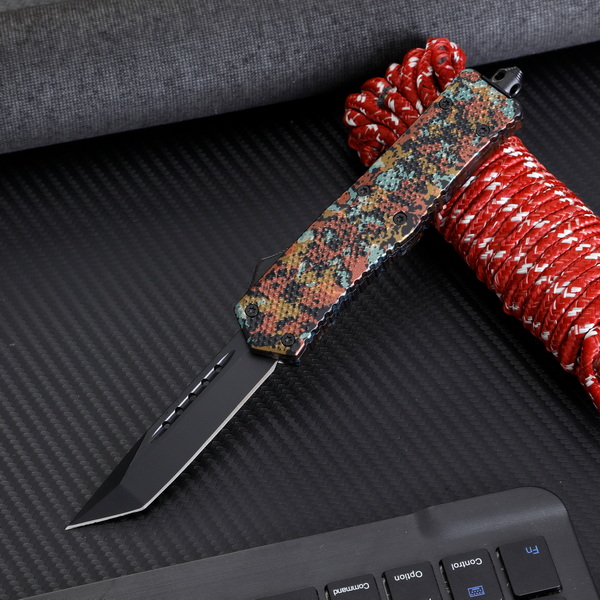
Tactical OTF Knives are a category of automatic knives whose blades deploy straight out from the front of the handle through an internal mechanism activated by a thumb slide or switch. The handle design is typically a closed, streamlined enclosure that protects the blade and supports confident one-handed operation. The deployment action is rapid, often under a second, and the retraction can be automatic (in double-action variants) or manual (in single-action variants), depending on the model and intended use. For professionals in military, law enforcement, outdoor survival, and fieldwork, this deployment geometry can translate into faster access, reduced grip alteration during draw, and a clean silhouette when carried in austere environments.[3][1]
- Enclosed front-loading blade path reduces exposure of the tang and internal spring assemblies, contributing to potentially better protection against debris ingress in harsh environments.
- High-quality spring systems crafted from corrosion-resistant alloys promote longevity under repeated cycles.
- Ergonomics emphasize a secure, fatigue-resistant grip, enabling stable handling in high-stress conditions.
- Blade geometry is often optimized for thrusting, piercing, or precise cuts, aligning with tactical and outdoor utility needs.
- Double-action Tactical OTF Knives: Dependent on an activation switch and a robust spring, these blades deploy and retract automatically, enabling rapid engagement and disengagement in critical moments.
- Single-action Tactical OTF Knives: Deployment is automatic, but retraction requires manual action, which can be favored for certain safety or regulatory profiles.
In both cases, the blade travels in a linear, front-to-out path, which distinguishes OTF designs from side-opening mechanisms found in many other automatic knives. This linear deployment is a hallmark that shapes handling characteristics and deployment consistency across different temperature and dirt conditions.[2][11]
Switchblades—often used as a generic term for automatic knives—deploy their blades via a side-opening mechanism. The blade is housed within the handle and springs outward through a pivot point, typically on the side of the handle. This family includes a broad range of styles and historical designs, some of which emphasize luxury branding, collector value, or utilitarian tasks. The deployment action is fast, but the geometry differs from the front-facing slide of OTF designs, which can influence grip stability, blade-to-handle balance, and how the user interacts with the knife in dynamic scenarios.[12][1]
- Deployment direction: side-opening versus front-out.
- Aesthetics: switchblades often carry a traditional or classic look, while Tactical OTF Knives lean toward a modern, utilitarian aesthetic.
- Blade configurations: switchblades may present a broader range of blade shapes and geometries depending on the retraction and locking mechanisms used in the model.
- Ergonomics and retention: front-loaded OTF mechanisms can offer different mass distribution characteristics compared to side-opening mechanisms, influencing wrist posture during draws.[5][1]
In field tests and professional use cases, Tactical OTF Knives emphasize rapid, predictable deployment with a secure lock-in during use. The front-entry design reduces lateral motion in the deployment axis, which can translate to smoother one-handed operation under gloves or cold conditions. Switchblades, while equally fast in many designs, may present varied performance depending on pivot tolerances, lubrication, and the specific mechanism employed by a given model.[11][5]
A common advantage attributed to Tactical OTF Knives is the fully enclosed handle, which supports consistent grip geometry across a range of hand sizes and glove conditions. The absence of side openings on the handle reduces snag potential, an important consideration during rapid movements in tactical scenarios. In contrast, switchblades with side-opening mechanisms can offer a wider variety of grip textures and handle profiles, which can be appealing for users prioritizing a specific balance point or aesthetic preference.[1][12]
Tactical OTF Knives frequently favor blade shapes with thrusting capability and robust tip geometry, suitable for piercing or controlled cuts in survival or defensive contexts. Switchblades may present more diverse blade shapes, enabling a greater range of utility tasks but potentially at the expense of the optimized tactical thrust profile found in many OTF designs.[4][1]
- OTF systems rely on a compact spring-and-bar assembly housed within a sealed channel. Quality materials and precision machining are essential for consistent performance and long service life under demanding environments.
- Switchblades can vary widely in build quality; some are highly engineered with premium materials, while others prioritize cost efficiency. Regular inspection of springs, detent systems, and blade alignment is important for ensuring reliable operation in both categories.[9][12]
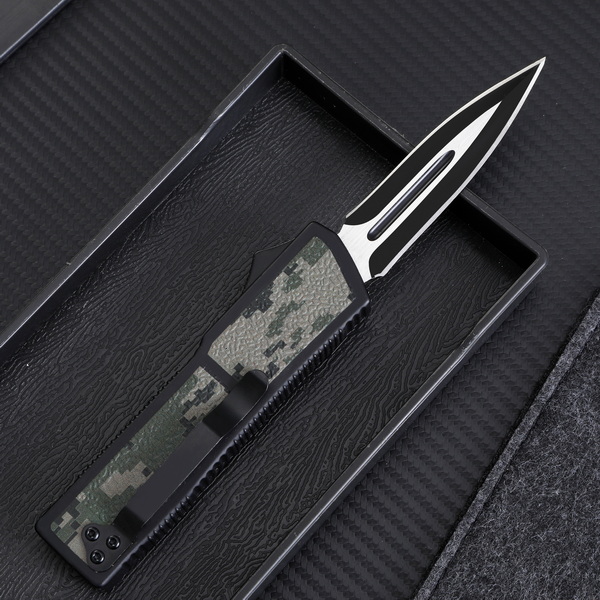
For OEM collaborations, material selection and process control are central to delivering consistent performance across global markets. In high-end manufacturing centers, Chinese facilities specializing in Tactical OTF Knives combine:
- Blade steels chosen for edge retention, corrosion resistance, and ease of sharpening (often stainless or tool steels).
- Handles crafted from aluminum alloys, carbon fiber composites, or titanium for weight reduction and strength.
- Precision springs and locking mechanisms rated for high cycle counts and reliability in variable temperatures.
- Finishes and coatings designed to resist wear, corrosion, and keep a subdued, tactical aesthetic.
OEM capabilities extend to customizable features such as blade steel grade, grind style (e.g., flat ground, hollow ground), handle texture, color anodizing, pocket clips, and branding. Compliance programs, quality assurance protocols, and traceability practices ensure products meet international safety standards and customer expectations across different regulatory environments.[13][3]
- Positioning: Emphasize Tactical OTF Knives as high-speed, professional-grade tools optimized for rapid deployment, reliability under stress, and ergonomic handling.
- Compliance: Highlight adherence to relevant laws in target markets, including restrictions on automatic knives, warranty coverage, and after-sales support.
- Education: Provide clear, visual guidance on deployment procedures, safe handling, and maintenance to reduce risk of injury and improve user confidence.
- Customization: Offer OEM options such as blade steel upgrades, grip materials, locking mechanisms, and branding to align with partner brands' identities and market requirements.
- Packaging and accessories: Curate packaging that communicates tool performance, warranty terms, and safety warnings—critical for retail success and regulatory compliance.
Legal frameworks governing automatic knives, including Tactical OTF Knives and switchblades, vary significantly by jurisdiction. Some regions impose strict prohibitions on carry, while others allow possession with certain restrictions (e.g., blade length, assisted-opening features, or specific deployment mechanisms). OEM manufacturers must stay abreast of evolving laws in key markets, ensuring product design, labeling, and marketing align with local requirements. Clear communication with distributors and end customers about legal considerations helps minimize compliance risks and maintains brand trust.[6][7][13]
Tactical OTF Knives and switchblades share a common ancestry in automatic blade deployment, but their mechanical architectures, handling characteristics, and tactical emphases diverge in meaningful ways. Tactical OTF Knives—defined by front-out deployment, enclosed handles, and blade geometries tailored for rapid piercing and controlled cuts—excel in professional, outdoor, and self-defense contexts where speed, grip security, and reliability are paramount. Switchblades, with side-opening action and broader blade-geometry options, remain versatile tools for general utility and collector interest, though their design may not be optimized for the same high-stress deployment scenarios as most Tactical OTF Knives.
For OEM partners, China-based manufacturers offer a robust ecosystem of engineering expertise, material science capability, and scalable production capacity to meet diverse brand requirements. By focusing on quality control, compliance with international regulations, and responsive customization, OEM collaborations can deliver Tactical OTF Knives that perform consistently across global markets while supporting brand differentiation and customer satisfaction. This alignment of engineering excellence, market-appropriate design, and rigorous quality management positions OEMs to serve foreign brands, wholesalers, and manufacturers with confidence and clarity.[3][9][13]
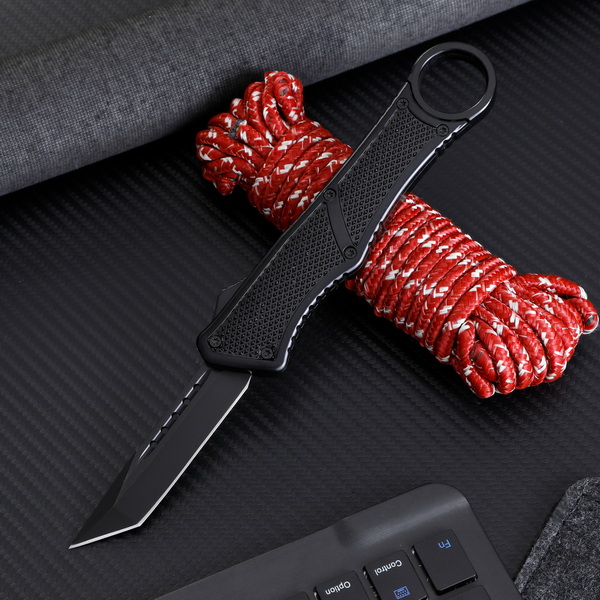
Tactical OTF Knives are knives with blades that slide out straight from the front of an enclosed handle via an automatic mechanism, designed for tactical and rapid deployment use.[1][3]
The main difference lies in blade deployment—OTF knives deploy linearly from the front, while switchblades deploy from the side through a folding pivot.[12][1]
Legal status varies by country and region; many have restrictions on automatic knives, making it essential to check local laws before purchase or import.[13]
Yes, many Chinese manufacturers offer custom OEM services for Tactical OTF Knives, allowing branding, material upgrades, and design modifications.[13]
Their fast blade deployment, ergonomic grips, and blade shapes optimized for thrusting make them excellent for self-defense and emergency scenarios.[10][1]
[1](https://uppercuttactical.com/blogs/news/types-of-switchblades-differences-and-benefits-of-each)
[2](https://eknives.com/blog/otf-vs-ots-knives-which-ones-best-for-you/)
[3](https://leeknives.com/what-is-an-otf-knife/)
[4](https://www.vipertecknives.com/blogs/news/switchblade-vs-otf-knives-key-differences-and-which-to-choose)
[5](https://www.58hrcknives.com/otf-knife-vs-switchblade-what-s-the-difference.html)
[6](https://knife-depot.com/pages/switchblade-vs-assisted-opening-knives)
[7](https://www.qspknife.com/blogs/news/knife-comparison-folding-vs-switchblade)
[8](https://swordsswords.com/blog/difference-between-switchblades-and-other-automatic-opening-knives/)
[9](https://www.fieldandstream.com/outdoor-gear/hunting/knives/best-automatic-knives)
[10](https://www.tektoknives.com/blogs/news/understanding-different-types-of-switchblades)
[11](https://www.youtube.com/watch?v=EwG2oytZCl8)
[12](https://www.bladehq.com/cat--Out-The-Front-Automatics--41)
[13](https://www.58hrcknives.com/top-custom-otf-knife-manufacturers-you-should-know-in-2025.html)


