
Views: 222 Author: Leah Publish Time: 2025-11-30 Origin: Site


Content Menu
● What Is an Automatic OTF Knife?
● Single‑Action vs Double‑Action Mechanisms
● Inside the Mechanism: How an Automatic OTF Knife Works
● Key Technological Milestones in Automatic OTF Knife Development
● Materials and Construction Decisions for OEM Buyers
● The Manufacturing Process: From Raw Stock to Finished Automatic OTF Knife
>> 3. Blade cutting and grinding
>> 5. Surface finishing and branding
>> 7. Final inspection and packaging
● Why China Has Become a Hub for Automatic OTF Knife OEM Production
● Design Trends Shaping Modern Automatic OTF Knife Products
● Quality Control and Reliability Testing
● Safety and Legal Considerations
● Maintenance Practices for End Users
● How Overseas Brands Can Work with a Chinese OEM Factory
>> 2. Concept and technical proposal
>> 3. Prototyping and validation
>> 4. Mass production planning
>> 5. Production, QC, and shipment
● FAQ
>> 1) What is the main advantage of an Automatic OTF Knife over a traditional folder?
>> 2) Is a double‑action Automatic OTF Knife more complicated to maintain?
>> 3) How long can a quality Automatic OTF Knife mechanism last?
>> 4) What should brands focus on when commissioning an OEM Automatic OTF Knife?
>> 5) How can end users keep their Automatic OTF Knife safe to carry?
Automatic OTF Knife technology has developed from experimental mechanisms into a mature, highly engineered category of cutting tools used by military, law‑enforcement, outdoor professionals, and everyday carry users. This evolution is driven by advances in blade steels, precision machining, spring design, and OEM manufacturing capabilities. As a Chinese factory specializing in Automatic OTF Knife OEM projects for overseas brands, wholesalers, and manufacturers, this article shares a practical, engineering‑led perspective on how these knives work, how they are produced, and how brands can build successful product lines.
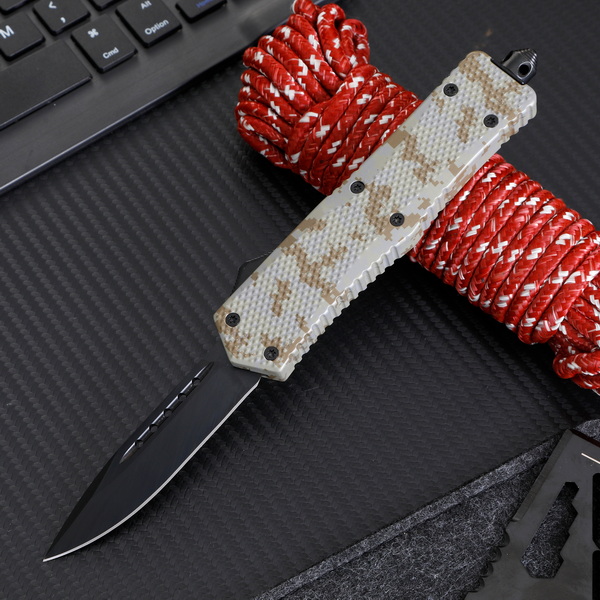
An Automatic OTF Knife (Out The Front knife) is an automatic knife whose blade moves linearly out of the front of the handle instead of pivoting out from the side like a traditional folding knife. The blade is driven by an internal spring mechanism activated through a button or slider and locks in place when fully deployed for safe, controlled use.
In a typical Automatic OTF Knife, the user can deploy the blade with one hand and, in double‑action designs, retract it the same way using the same slider or switch. This architecture allows rapid access to the blade in tight spaces, when wearing gloves, or when the other hand is occupied, which makes the Automatic OTF Knife attractive in tactical, rescue, and outdoor scenarios.
There are two fundamental mechanism types in the Automatic OTF Knife category: single‑action and double‑action. A single‑action Automatic OTF Knife automatically deploys the blade when the button is pressed, but the user must manually reset or retract the blade, often by pulling a charging handle or resetting the spring in a separate step. This design is mechanically simpler and can offer slightly higher power in deployment, but it is slower to put back into a ready‑to‑fire state.
A double‑action Automatic OTF Knife, by contrast, uses a more complex arrangement of springs, latches, and tracks, allowing the same control to both fire and retract the blade. When the user pushes the slider forward, the blade shoots out and locks; pulling the slider back releases the lock and draws the blade into the handle, resetting the mechanism at the same time. For OEM projects targeting professional, EDC, or outdoor markets, double‑action Automatic OTF Knife designs are now the dominant choice because of their convenience and user‑friendly operation.
The engineering of an Automatic OTF Knife revolves around several key components: the handle with an internal track, the blade with stop pins, the drive spring assembly, and front and rear latches operated by a switch plate. Inside the handle, a long, milled track guides the blade in a straight line. A pin on the blade rides in this track and defines both the stroke length and the end positions of the Automatic OTF Knife.
In a double‑action Automatic OTF Knife, the user's thumb moves a trigger or slider connected to a plate that controls both the latches and a paired spring assembly. When the slider moves forward, it tensions the springs while also releasing the rear latch that holds the blade in the closed position. As soon as the latch opens, stored spring energy propels the blade along the handle track until it reaches the fully open position and engages the front latch. Pulling the slider back reverses the sequence: the front latch opens, the spring energy is redirected, and the blade retracts into the handle where the rear latch secures it.
Because the Automatic OTF Knife relies on tight coordination between track geometry, latch timing, and spring strength, small errors in machining or assembly can cause misfires, sluggish deployment, or blade play. This is why serious OEM production of an Automatic OTF Knife demands strict tolerances, especially in the handle internals, track surfaces, and latch engagement faces.
Over decades of refinement, several technical advances have fundamentally improved the Automatic OTF Knife:
- Modern blade steels: Earlier designs often used simple carbon steels that rusted easily and lost their edge quickly. Today, Automatic OTF Knife blades commonly use tool steels and advanced stainless steels that balance hardness, toughness, and corrosion resistance, helping blades hold an edge while withstanding repeated deployment and hard cutting tasks.
- Precision CNC machining: Early OTF designs sometimes suffered from rough action and noticeable blade wobble because of loose tolerances. Now, CNC milling and EDM machining allow tight control over track dimensions and latch interfaces, giving the Automatic OTF Knife smoother action, better lockup, and a more solid feel in hand.
- Improved spring technology: Advances in spring materials and heat treatment have made Automatic OTF Knife mechanisms more durable and consistent. Modern springs maintain tension over thousands of cycles and are tuned so that deployment feels crisp but controlled instead of overly violent.
- Protective finishes and coatings: PVD, DLC, black oxide, stonewash, and other finishes improve rust resistance and wear performance while giving the Automatic OTF Knife distinctive aesthetics. For OEM brands, these treatments are essential tools for differentiation.
Together, these milestones turned the Automatic OTF Knife from a niche, somewhat unreliable gadget into a professional‑grade platform used across many industries.
For overseas brands working with a Chinese factory, choosing the right materials is central to positioning any Automatic OTF Knife line. Blade steel sets the performance tone: mid‑range stainless steels and popular tool steels give a strong balance of toughness and edge retention for mainstream Automatic OTF Knife models, while premium powder steels can be reserved for flagship or limited‑edition pieces targeting enthusiasts.
Handle materials require a similar balance. Zinc alloy handles provide good detail and weight at lower cost, making them attractive for entry‑level Automatic OTF Knife products. Aircraft‑grade aluminum offers lighter weight, higher rigidity, and a modern look, which suits mid to high‑end Automatic OTF Knife designs. Composite materials such as G10 and carbon fiber introduce excellent grip and strength with a more technical, performance‑oriented style.
Internal parts—springs, followers, latches, and switch plates—must be chosen for fatigue resistance and wear tolerance. In a well‑designed Automatic OTF Knife, these components are made from hardened steel or high‑strength alloys and then carefully finished to minimize friction. As an OEM partner, a factory can help optimize this material mix according to the target price, user segment, and expected duty level of the Automatic OTF Knife.
Producing a stable, repeatable Automatic OTF Knife at scale involves multiple coordinated stages:
The process begins with CAD modeling and engineering analysis. The designer and factory engineer define the external profile, internal channel geometry, spring type, latch angles, and blade dimensions. For an Automatic OTF Knife, special attention is paid to track straightness, clearance between blade and handle, and stress distribution on the latches and pin.
Bar stock or pre‑cut blanks of aluminum or zinc alloy are milled on CNC machines. Each Automatic OTF Knife handle half typically undergoes several operations to create internal channels, pockets for the blade track, switch plate, and springs, plus mounting points for clips and screws. After machining, the parts are deburred, tumbled, and sometimes bead‑blasted to smooth edges and prepare surfaces for anodizing or coating.
Blade blanks for the Automatic OTF Knife are cut from steel sheets or bar, often slightly oversized to allow precise grinding later. Heat treatment brings the steel to its target hardness. The factory then grinds bevels, refines the profile, and machines any required holes or notches for stop pins and latches. The blade is finished with the chosen surface treatment and finally sharpened by hand or on guided systems.
Springs, followers, latches, plates, and fasteners are produced or sourced to exacting standards. Because every Automatic OTF Knife depends on these parts for consistent action, a professional OEM factory runs incoming inspections to verify hardness, dimensions, and surface quality.
Handle components for the Automatic OTF Knife may be anodized, coated, or painted. Logos, model names, and serial numbers are added via laser engraving or other marks. At this point, the visual identity of the OEM brand is fully integrated into the Automatic OTF Knife.
Skilled technicians assemble the Automatic OTF Knife by installing springs, followers, latches, blades, and clips. Each unit is cycled by hand multiple times to ensure reliable deployment and retraction, and minor adjustments (such as screw torque or lubrication points) are made to fine‑tune the action.
Completed Automatic OTF Knife units undergo final quality control checks for cosmetic defects, blade centering, lockup strength, and deployment speed. Qualified units are then cleaned, oiled, and packed into branded boxes or OEM packaging specified by the customer.
This step‑by‑step approach allows an experienced factory to build stable production runs of Automatic OTF Knife models with consistent performance from piece to piece.
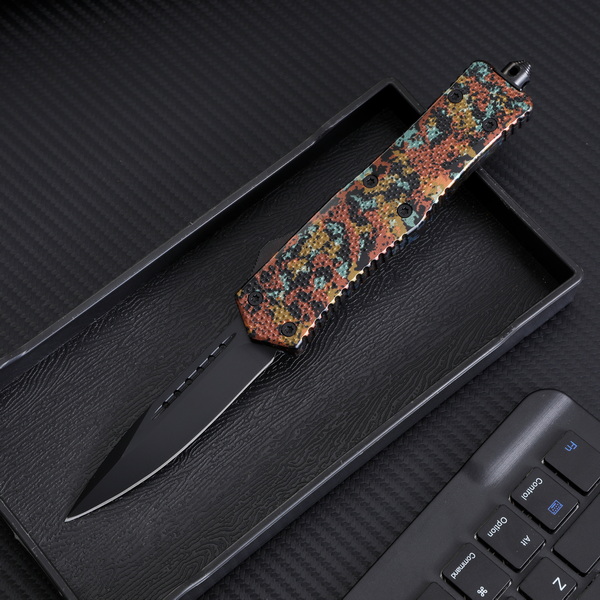
China has developed a dense industrial ecosystem around knives and cutting tools, and this directly benefits Automatic OTF Knife projects for overseas clients. Key steel suppliers, CNC machine shops, coating facilities, hardware makers, and packing specialists are clustered together, reducing logistics time and cost for each Automatic OTF Knife batch.
Labor specialization also plays an important role. Many technicians in major knife‑making regions have years of experience assembling and tuning Automatic OTF Knife mechanisms, which shortens the learning curve for new designs and speeds up scaling from prototype to mass production. Combined with competitive manufacturing costs and flexible MOQs, this environment makes Chinese factories strong partners for brands and wholesalers wanting to launch or expand an Automatic OTF Knife line.
Market preferences evolve quickly, and successful OEM projects stay aligned with current trends while preserving functional performance. Several clear directions stand out:
- Slim and lightweight profiles: Many users want an Automatic OTF Knife that carries comfortably in the pocket all day, so slim, flat handles with reduced weight are popular.
- Enhanced ergonomics and grip: Textured surfaces, finger grooves, jimping, and contouring make the Automatic OTF Knife more secure in wet or gloved hands, an advantage in outdoor and tactical contexts.
- Functional add‑ons: Features such as deep‑carry clips, glass breakers, and lanyard holes increase the versatility of an Automatic OTF Knife without drastically affecting size.
- Bold aesthetics and personalization: Limited‑run colors, two‑tone blades, and modular handle scales encourage collectors and enthusiasts to own multiple Automatic OTF Knife variants from the same brand.
For an OEM project, combining a reliable core mechanism with a flexible "shell" of handle designs and finishes allows one platform to serve multiple segments and price levels.
Because an Automatic OTF Knife relies on precise moving parts, quality control is more demanding than with simple fixed‑blade or manual folding knives. Responsible factories implement QC at three main stages:
- Incoming inspection: Steel and components are checked for chemical composition, hardness, and dimensional accuracy. This prevents defective materials from entering the Automatic OTF Knife production line.
- In‑process checks: During machining and assembly, operators measure critical dimensions of handles, blades, and internal parts. Trial assemblies of Automatic OTF Knife mechanisms are evaluated for fit, track smoothness, and latch engagement.
- Final functional testing: Each Automatic OTF Knife is cycled repeatedly to confirm consistent deployment and retraction. Inspectors look for failures to lock, partial firing, excessive blade play, and cosmetic flaws. Only knives that pass these tests are approved for shipping.
Brands that demand higher standards can request additional tests, such as corrosion testing or extended cycle testing, for their Automatic OTF Knife lines to support premium positioning.
While an Automatic OTF Knife is a powerful tool, it must be treated with respect and handled responsibly. Mechanically, good designs incorporate secure locks, tuned deployment force, and sometimes secondary safety systems to resist unintentional activation in pockets or pouches. Clear user instructions on operation and maintenance should accompany every Automatic OTF Knife shipped.
Legally, automatic knives—including the Automatic OTF Knife—are regulated differently around the world. Some regions allow them freely, others impose restrictions on carry or blade length, and a few prohibit them entirely. Before placing OEM orders or planning marketing campaigns, overseas customers should research local regulations and consult legal professionals to ensure their Automatic OTF Knife products comply with all applicable rules.
End‑user care has a direct impact on the long‑term performance of any Automatic OTF Knife. Owners should keep the blade clean, dry, and lightly oiled, especially near the pivot and along the sections that run inside the handle track. Since pocket lint, dust, and debris can accumulate in the internal channel, periodic cleaning with compressed air and suitable solvents helps the Automatic OTF Knife maintain smooth, reliable action.
Users should avoid disassembling their Automatic OTF Knife unless the manufacturer specifically allows it and provides guidance, since incorrect reassembly can damage springs or latches. For heavy users—such as those carrying an Automatic OTF Knife for work—inspecting screws, clips, and action feel every few weeks and applying a drop of lubricant where recommended will keep the knife ready for demanding tasks.
When an overseas brand or wholesaler approaches a Chinese factory for an Automatic OTF Knife project, the collaboration usually follows a structured process:
The customer outlines target users, budget, blade length, mechanism type (usually double‑action Automatic OTF Knife), design style, and any compliance needs.
The factory offers initial design sketches or suggests existing Automatic OTF Knife platforms that can be customized. Materials, finishes, and expected performance levels are discussed and refined.
Sample Automatic OTF Knife units are produced and shipped for hands‑on evaluation. The client tests action, ergonomics, aesthetics, and branding elements. Feedback is consolidated and revisions are made as needed.
After final confirmation, the factory secures materials, schedules machining and finishing capacity, and sets up assembly lines tailored to the Automatic OTF Knife project.
The order is produced with multiple quality gates, packed in OEM‑specified packaging, and shipped with the necessary export documentation. The result is a ready‑for‑market Automatic OTF Knife line carrying the client's brand identity.
Clear communication throughout this process—especially on technical tolerances and visual expectations—is crucial to achieving consistent, high‑quality Automatic OTF Knife products that meet the brand's goals.
The Automatic OTF Knife has undergone a remarkable transformation, evolving from early experimental mechanisms and military tools into a refined category of fast‑deploying, precision‑engineered knives. Advances in steels, CNC machining, spring systems, and protective finishes have made the modern Automatic OTF Knife more reliable, safer, and better suited to everyday and professional use than ever before. For global brands and wholesalers, partnering with a capable Chinese OEM factory creates access to this technology along with flexible customization, scalable production, and competitive pricing.
By understanding how an Automatic OTF Knife works internally, recognizing the importance of materials and tolerances, and following best practices in safety, maintenance, and legal compliance, businesses can build product lines that stand out in a crowded market. Whether aimed at outdoor enthusiasts, tactical professionals, or everyday carry users, a well‑designed Automatic OTF Knife backed by strong OEM engineering offers a compelling blend of function, style, and reliability.
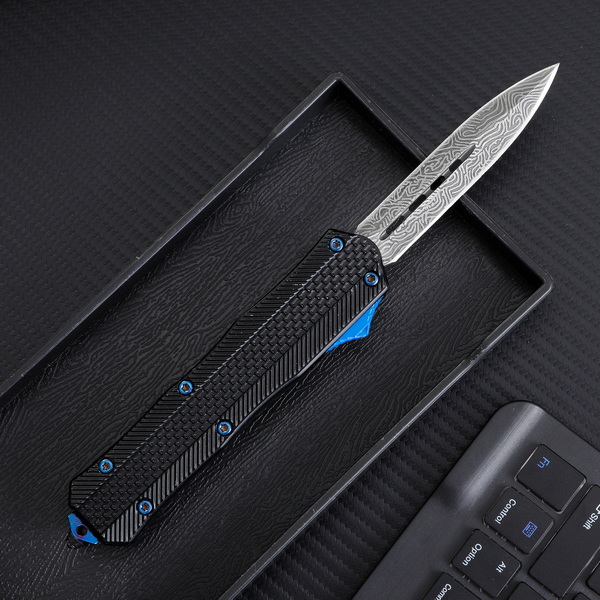
The main advantage of an Automatic OTF Knife is rapid, one‑handed deployment in a straight line out of the front of the handle, which allows quick access to the blade in confined spaces or under stress. This direct, linear action reduces the hand movement required compared with many side‑opening folding knives and can be easier to operate when wearing gloves.
A double‑action Automatic OTF Knife has more moving parts than a simple folder, but regular user maintenance is still straightforward: keep the blade and handle clean, avoid excessive dirt entering the mechanism, and apply light lubrication as recommended. Internal repair or full disassembly is usually best left to the manufacturer or a qualified technician, but routine cleaning and inspection are easy for most users.
With proper design, quality materials, and correct heat treatment, the internal springs and latches of an Automatic OTF Knife can withstand thousands of deployment cycles without significant performance loss. Longevity depends on how the knife is used and maintained, but a well‑built Automatic OTF Knife from a reputable OEM factory is engineered for years of normal service in outdoor, EDC, or work environments.
Brands should define their target users, price range, design language, and legal constraints before starting an OEM project. When working with a factory, it is crucial to pay attention to blade steel selection, handle materials, mechanism type, and tolerances. Clear quality standards and detailed feedback on prototypes help ensure the final Automatic OTF Knife line matches both performance and aesthetic expectations.
Users should always carry the Automatic OTF Knife in a secure sheath or pocket with the safety (if present) engaged and the blade fully retracted and locked. Avoid placing the knife loosely in bags where other objects could press the activation switch. Regularly checking the lock function, screws, and clips, and following the manufacturer's operating instructions, will help keep the Automatic OTF Knife safe, dependable, and ready for responsible use.
[1](https://www.youtube.com/watch?v=EwG2oytZCl8)
[2](https://www.youtube.com/watch?v=_TEVM4NAlxk)
[3](https://www.youtube.com/watch?v=krPPEd3X1sM)
[4](https://www.youtube.com/watch?v=pAYLfzSzWdw)
[5](https://nobliecustomknives.com/what-is-an-otf-knife-and-how-does-an-otf-knife-work/)
[6](https://www.youtube.com/watch?v=WH-tXXd3pG8)
[7](https://eknives.com/blog/microtech-knives-manufacturing-process/)
[8](https://tacknivesusa.com/how-does-an-otf-knife-work/)
[9](https://knifedogs.com/threads/sr1-scale-release-automatic-build-tutorial.52152/)
[10](https://www.youtube.com/watch?v=s0mx_j5ihJg)


