
Views: 222 Author: Leah Publish Time: 2025-10-17 Origin: Site


Content Menu
● Origins and Early Designs of OTF Knives
● Technological Advancements in Heavy-Duty OTF Knives
>> Blade Materials and Durability
>> Handle Materials and Ergonomics
● Heavy-Duty OTF Knife Manufacturing: OEM Insight
● Military Influence on Heavy-Duty OTF Knife Design
● Diverse Applications of Heavy-Duty OTF Knives Today
● Maintenance and Care for Heavy-Duty OTF Knives
● Innovations Shaping the Future of Heavy-Duty OTF Knives
● Frequently Asked Questions (FAQ)
>> 1. What is a heavy-duty OTF knife?
>> 2. How does a double-action OTF knife work?
>> 3. What materials are commonly used in heavy-duty OTF knife construction?
>> 4. Are heavy-duty OTF knives legal to carry?
>> 5. How do OEM manufacturers ensure quality in heavy-duty OTF knives?
Out-the-front (OTF) knives have carved a distinct place in knife history and design innovation, particularly in the category of heavy-duty utility and tactical tools. These knives, marked by their ability to deploy a blade straight out from the front of the handle, combine practicality with rapid deployment. Over decades, the evolution of heavy-duty OTF knife design has balanced mechanical ingenuity, advanced materials, and user-centric functionality—transforming these tools from historical military essentials to modern-day everyday carry (EDC) and specialized-use knives.
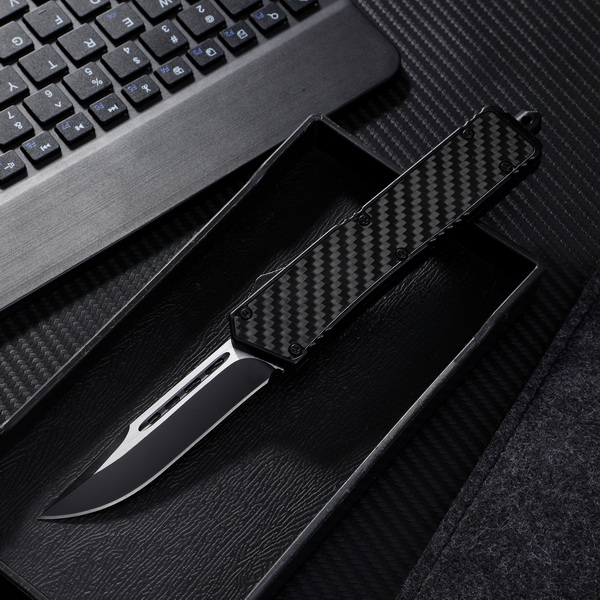
The roots of OTF knives extend back to the 18th century with early folding spike bayonets, designed to complement firearms such as flintlocks with quickly deployable blades. These first mechanized knives enabled soldiers to transform their guns into thrusting weapons rapidly, embodying the essential principles of OTF mechanics centuries before the term existed.[1][2]
In the late 19th century, key innovations heralded the formal evolution of OTF knives. American inventor James S. Parker filed patents for sliding blade knives with retractable blades operated by a push mechanism. This early mechanism laid the groundwork for more sophisticated OTF designs. George Schrade, a pioneering figure in automatic knives, contributed pivotal inventions for telescoping blades and spring-powered deployment in the early 20th century. The refinement of internal spring and locking systems during this period addressed mechanical challenges like compactness, smooth blade deployment, and safety.[3]
Europe also influenced early OTF development, with German craftsmen producing gravity knives for paratroopers in the 1930s. These deployed blades via gravity assistance rather than springs but adhered to the OTF principle of front blade extension. Italy's Maniago region became known for sleek stiletto-style OTF knives prized for both utility and aesthetics.[2][3]
The core evolution of heavy-duty OTF knives is driven by progress in materials science and mechanical engineering.
Early OTF blades typically used carbon steel, which offered cutting efficiency but required regular maintenance against corrosion. Modern heavy-duty OTF knives often employ premium steels such as AUS-8, S30V, M390, or D2. These alloys provide superior edge retention, wear resistance, and corrosion resistance, essential for heavy-duty use in tactical, outdoor, and industrial environments.[4][5][3]
These steels are heat-treated to optimize hardness and toughness, reducing the frequency of sharpening and increasing the knife's lifespan even in demanding applications. Manufacturers also apply protective coatings like titanium nitride or black oxide to further enhance corrosion resistance and reduce blade glare during tactical operations.
Deployment mechanisms evolved from basic spring-loaded single-action models, which require manual blade retraction, to advanced double-action systems allowing automatic blade extension and retraction with a single button control. This innovation improves operational efficiency and safety in high-pressure scenarios and continuous heavy use.[6][7]
Double-action OTF knives feature complex internal locking systems that hold the blade firmly in place during use but allow quick, reliable release and retraction. These systems have matured significantly, minimizing mechanical failures and blade wobbles, which historically plagued early designs. Recent advancements incorporate stainless steel internal components and corrosion-resistant springs to enhance longevity.
Handle construction has advanced beyond simple metals to incorporate lightweight titanium, anodized aluminum, and durable composites like G10 and carbon fiber. These materials enhance strength-to-weight ratio and provide textured grips suitable for wet or gloved hands, important for demanding tasks that define heavy-duty usage.[8][3]
Ergonomic designs now include contours and finger grooves to improve grip security and comfort during prolonged use. Some handles feature modular components or customizable scales for personalized fit and style. Reinforced liners within handles prevent flexing and add structural integrity, essential for heavy-duty knives used in tactical or survival situations.
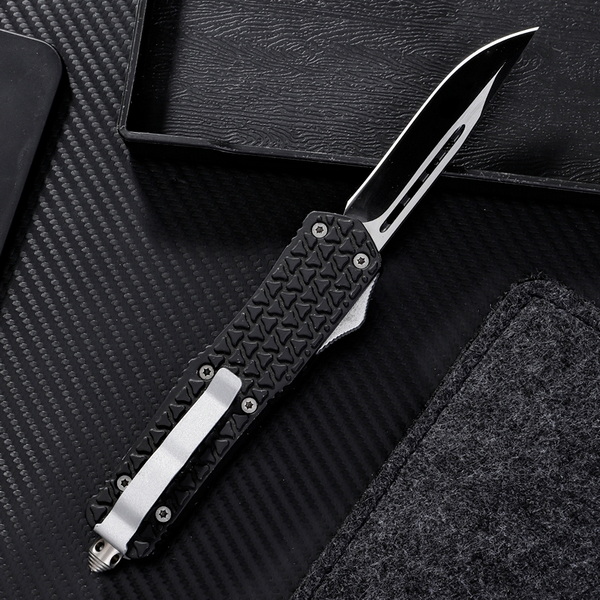
Yangjiang Ruizhen Industry and Trade Co., Ltd., a leading Chinese manufacturer specializing in OEM services for foreign brands, exemplifies how modern production combines quality craft with advanced technology. OEM heavy-duty OTF knives undergo rigorous design, testing, and quality control to ensure these knives meet global standards for performance and durability.
By utilizing CNC machining and precision assembly, manufacturers can produce knives with consistent mechanisms, smooth blade action, and reliable locking systems. The combination of automated manufacturing for precision parts and skilled human craftsmanship for assembly and quality checks results in OTF knives that exhibit both reliability and aesthetic appeal.[6]
OEM manufacturers stay abreast of new innovations by collaborating with global brand designers and engaging customer feedback loops. This responsiveness allows them to continually improve mechanism strength, blade sharpness, and ergonomics while maintaining cost-effectiveness. High-quality OEM sourcing provides international brands with cost-efficient yet durable heavy-duty OTF knives tailored to their specific market needs.
The military demand for compact, swift-deploying knives has shaped much of the heavy-duty OTF knife's evolution. German Luftwaffe gravity knives were among the earliest models used in paratrooper operations, designed specifically for quick line-cutting and survival tasks. Post World War II, the lessons learned fueled ongoing improvements in OTF mechanics and materials, influencing designs still popular among tactical users today.[3]
Modern military-grade OTF knives emphasize robust build, corrosion-resistant steel, and ergonomic handles to withstand extreme conditions. In addition to traditional blade styles, assault and tactical OTF knives often feature tanto tips or reinforced spines for piercing and prying tasks. Some models also integrate glass breakers and seatbelt cutters, expanding their utility in emergency response.
The cross-pollination of military technology into civilian models has significantly expanded the appeal of heavy-duty OTF knives. Enhanced durability, premium materials, rapid deployment, and safety have become key selling points for outdoor enthusiasts, law enforcement officers, and knife collectors alike.[9]
Heavy-duty OTF knives bridge several specialized and consumer markets given their unique design advantages:
- Tactical and Military Use: Fast deployment and durable construction cater to military personnel and law enforcement officers who require reliable, one-handed knives in the field.
- Outdoor and Survival: Lightweight, corrosion-resistant knives are vital for campers, hikers, and survivalists facing various environmental challenges.
- Everyday Carry (EDC): Compact, reliable knives are popular for urban users who value quick access and multifunctional tools for daily tasks.
- Collectors' Items: Limited edition releases, artist collaborations, and intricate customizations make OTF knives prized collectible items among enthusiasts and connoisseurs.
The market offers a variety of blade shapes such as dagger, tanto, drop point, and spear point. Variations in blade length, handle design, and mechanism complexity cater to a broad spectrum of user preferences and requirements, effectively covering tasks from precise cutting to rigorous utility use.[10][8]
Given their complex internal mechanisms and tactical utility, heavy-duty OTF knives require thoughtful maintenance to ensure peak performance.
Regular cleaning is essential to remove dirt, lint, and debris that can hinder blade deployment. Users should disassemble the knife if possible or use compressed air and cleaning solvents designed for knives to maintain mechanism integrity. Lubrication with appropriate oil on moving parts prolongs spring life and smooth action.
Sharpening should be done with care, respecting the blade's specific steel characteristics. Heavier steels require diamond or ceramic sharpeners, while corrosion-resistant coatings warrant gentler handling to avoid surface damage. Proper storage in dry environments further reduces the risk of corrosion and mechanical faults.
Looking ahead, heavy-duty OTF knives are poised to benefit from several emerging trends:
- Advanced Composite Materials: Use of aerospace-grade composites and metal alloys will reduce weight while enhancing strength.
- Smart Technology Integration: Potential inclusion of sensors for blade position, usage tracking, or integrated lighting for low-visibility operations.
- Modular Designs: Enhanced modularity allowing users to customize blade types, handle grips, and mechanism tension depending on mission or task.
- Sustainability Focus: Adoption of eco-friendly manufacturing processes and sustainable material sourcing responding to increasing environmental awareness.
These advancements will continue to elevate the functional and aesthetic value of heavy-duty OTF knives, ensuring they adapt to both evolving professional demands and consumer preferences.
The evolution of the heavy-duty OTF knife design showcases exceptional advancement from rudimentary folding bayonets to cutting-edge precision instruments. Driven by military demands, technological breakthroughs, and user-centric innovation, these knives blend rapid deployment, mechanical reliability, and durable materials into versatile tools fit for tactical experts, outdoor professionals, and everyday users alike.
The blend of craftsmanship and modern manufacturing techniques, especially among OEM manufacturers like Yangjiang Ruizhen, ensures that heavy-duty OTF knives remain accessible yet uncompromising in quality. As designs continue to evolve with innovations in steel technology and ergonomic engineering, the heavy-duty OTF knife's legacy will endure as a symbol of functional elegance and rugged reliability for years to come.
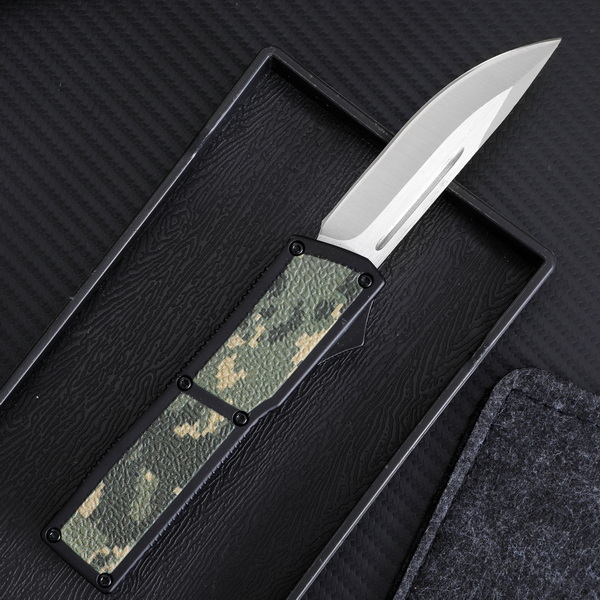
A heavy-duty OTF knife is a robust out-the-front knife designed for tough tasks, incorporating durable materials and advanced mechanisms to ensure strength, reliability, and rapid blade deployment and retraction.[5][4]
Double-action OTF knives use a spring mechanism activated by a button that both extends and retracts the blade automatically, allowing one-handed operation and quick blade control.[6]
Common materials include high-performance stainless steels like S30V or D2 for blades, and titanium, aluminum, G10, or carbon fiber for ergonomic, lightweight, and durable handles.[8][3]
Laws vary by jurisdiction; while many places allow OTF knives, others classify them as switchblades or restricted weapons. It is essential to check local and national laws before purchasing or carrying an OTF knife.[7]
OEM producers like Yangjiang Ruizhen maintain quality through rigorous design reviews, CNC machining for precise parts, strict QC processes, and extensive testing to ensure durability and mechanical reliability.[6]
[1](https://swordsswords.com/blog/-otf-automatic-knives-what-were-they-invented-for/)
[2](https://swordsswords.com/blog/history-of-otf-knives-from-military-to-everyday-carry/)
[3](https://bladeops.com/blog/the-history-of-otf-knives-from-military-tool-to-everyday-essential/)
[4](https://www.tacticalsportinggoods.com/blogs/news/understanding-otf-knives-a-comprehensive-guide-to-their-features-and-uses)
[5](https://www.kombativ.com/black-tactical-otf-knife)
[6](https://tacknivesusa.com)
[7](https://tacknivesusa.com/what-is-an-otf-knife-and-how-is-it-different-from-other-switchblades/)
[8](https://hiconsumption.com/gear/best-otf-knives/)
[9](https://bladeops.com/blog/an-overview-of-military-grade-automatic-knives/)
[10](https://sincitypress.com/2025/08/09/the-tekto-a7-zastava-otf-a-knife-born-from-history-built-for-today/)


