
Views: 222 Author: Loretta Publish Time: 2025-10-10 Origin: Site


Content Menu
● Blade Types and Their Influence on OTF Knife Performance
>> Blade Shapes and Their Performance Roles
>> Blade Material Considerations
● Handle Materials Impact on OTF Knife Performance
>> Composite and Decorative Materials
>> Ergonomic Design and Texture
● Deployment Mechanisms and Internal Engineering
● Balancing Blade and Handle Choices for Optimal Performance
● Maintenance and Longevity Factors
● Frequently Asked Questions (FAQ)
>> 1. What blade type is best for everyday carry (EDC) OTF knives?
>> 2. How do handle materials influence the durability and feel of an OTF knife?
>> 3. Are double-edged OTF knives practical for outdoor use?
>> 4. Can carbon steel blades be used in OTF knives without rust problems?
>> 5. What is the difference between single-action and double-action OTF knives?
Out-the-front (OTF) knives are highly prized cutting tools known for their unique blade deployment mechanism where the blade extends directly from the front of the handle. This remarkable design offers speed, convenience, and compactness, making OTF knives ideal for outdoor use, tactical situations, and everyday carry (EDC). For OEM manufacturers like Yangjiang Ruizhen Industry and Trade Co., Ltd., mastering the impact of blade type and handle material on OTF knife performance is crucial for producing outstanding knives that meet diverse market demands.
This article offers an expanded, in-depth exploration of how blade shapes, steel types, and handle materials influence OTF knives' durability, ergonomics, and operational effectiveness. Included are recommended practices, design considerations, and frequently asked questions to guide users and producers in understanding these indispensable factors.
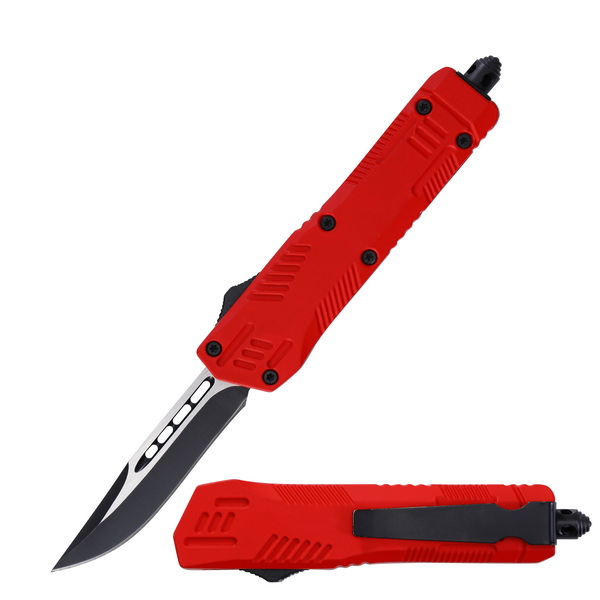
An OTF knife is a specialized automatic knife where a spring mechanism propels the blade straight out from the handle's front upon activation. The deployment can be engaged by sliding a thumb switch or pressing a button, enabling rapid one-handed use. This linear blade motion contrasts with entry-level folding knives whose blades pivot open from the handle's side.
There are two main types of OTF knives:
- Single-action OTF knives: The blade springs out automatically but must be manually retracted after use.
- Double-action OTF knives: Both blade deployment and retraction operate via the same spring-assisted mechanism, controlled with a single thumb slider or button.
The design balances cutting accessibility with compactness, favored by tactical professionals and outdoor enthusiasts for quick-response scenarios or daily utility.
The blade is the heart of an OTF knife and plays a pivotal role in determining cutting efficiency, edge retention, safety, and maintenance.
The following blade edges are commonly used in OTF knives, each suited for different tasks:
- Single-edged blades: Most prevalent in outdoor and EDC knives due to safer handling and stronger tips. The unsharpened spine allows controlled use with fingers resting safely.
- Double-edged blades: Found mostly in tactical knives, these blades have sharpened edges on both sides, maximizing cutting potential but increasing handling risk.
Edges can be further classified into:
- Straight edges: Offer precise, clean cuts and are easiest to maintain.
- Serrated edges: Designed for tough materials like rope or fabric; they stay sharp longer but require specialized sharpening tools.
- Partially serrated edges: Combine straight and serrated sections to provide versatility across different cut types.
Different blade profiles fit various user needs and environments:
- Tanto: Characterized by angular, reinforced tips, they excel in piercing tasks and durability against chipping.
- Drop point: A curved spine tapering smoothly to the tip provides a balance between piercing ability and slicing precision, ideal for hunting and daily tasks.
- Clip point: Features a concave curve near the tip for precision work and fine slicing.
- Spear point: Symmetrical edges and a centered tip optimized for thrusting and tactical use.
The choice of steel determines blade sharpness longevity, corrosion resistance, and toughness:
- Stainless steels such as VG-10, CPM S30V, and M390 are favored for their resistance to rust and ability to maintain sharp edges even under wet or corrosive conditions.
- Carbon steels like 1095 or A2 provide superior edge retention and ease of sharpening but require regular maintenance to avoid rust.
- Tool steels like D2 offer a middle ground with wear resistance and reasonable corrosion resistance but need some upkeep.
High-end OTF knives often use premium steels like CPM-S35VN or CPM-Magnacut, combining longevity, edge retention, and corrosion resistance for demanding users.
Blade sizes for OTF knives usually vary:
- Mini blades (<2 inches): Ultra-compact; good for light EDC and keychain carry.
- Medium blades (2-3.5 inches): Most versatile, suitable for general use and tactical applications.
- Large blades (>3.5 inches): Better for heavy-duty cutting and self-defense but less convenient to carry.
Blade thickness also impacts strength; thicker blades resist bending or chipping but add weight and reduce cutting finesse.
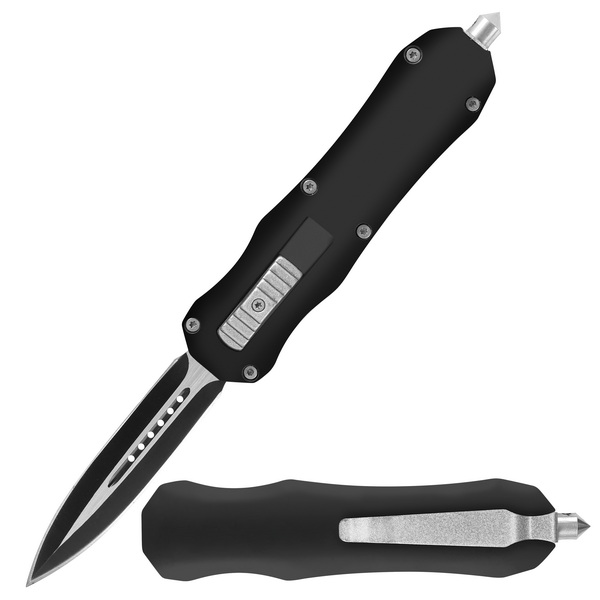
The handle is more than just a grip—it safeguards the internal spring mechanism, provides comfort, affects balance, and contributes to the knife's overall durability.
- Zinc Alloy: Economical and strong, zinc alloy is often used in budget OTF knives. It is heavier and corrosion-resistant but lacks the premium feel and finish of higher-end metals.
- Aluminum Alloy: Lightweight, corrosion-resistant, and durable. Aluminum handles are popular among buyers seeking a balance of heft and portability, often anodized for color and corrosion prevention.
- Titanium: Known for its extraordinary strength-to-weight ratio and corrosion resistance. Titanium handles elevate premium OTF knives but come at a higher manufacturing cost. The metal can be textured for grip but may feel cold or slippery if untreated.
To enhance grip and appearance, handles sometimes incorporate:
- G10: A fiberglass-based composite offering excellent grip, durability, and water resistance.
- Carbon Fiber: Extremely lightweight and strong with a high-tech look, though more brittle under impact.
- Polymer (FRN/GRN): A budget-friendly, durable plastic with a good grip but lacking premium qualities.
- Wood: Offers classic aesthetics but less common in OTF knives due to moisture sensitivity.
- Coatings such as Cerakote: Provide color customization and added surface protection.
Handle design plays a role in how securely the knife is held, especially in wet or gloved conditions. Textured surfaces, finger grooves, and ergonomic contours help maintain grip stability and comfort, improving overall safety and performance.
The internal spring and firing plate determine the blade's deployment speed and reliability.
- Single-action OTF knives have a simpler mechanism with a strong spring that deploys the blade automatically but requires manual retraction.
- Double-action models use more complex, spring-driven systems for both deployment and retraction from the same control, favored for tactical efficiency.
A smooth track and well-machined internals prevent jams or misfires, crucial for dependable performance.
When designing or selecting an OTF knife, blade and handle choices must harmonize to match the user's intended application:
- Outdoor enthusiasts needing ruggedness may favor carbon steel blades paired with textured G10 or rubberized handles.
- Tactical users often prefer stainless steel blades (e.g., CPM S30V) in drop point or tanto shapes, combined with lightweight, durable aluminum or titanium handles.
- Collectors and premium users seek exotic steels with artistic handles in carbon fiber or titanium with elegant finishes.
The internal mechanism also requires protection by a durable handle that can withstand impact and environmental wear while ensuring comfortable, secure handling.
Proper care extends OTF knives' life and performance:
- Clean internal mechanisms regularly to remove dirt and lint.
- Lubricate blade tracks for smooth action.
- Sharpen blades only as needed to preserve steel.
- Use rust prevention oils on carbon steel blades.
Regular maintenance enhances blade sharpness, deployment reliability, and overall user safety.
The performance of an OTF knife hinges on the thoughtful selection and integration of blade type and handle material. Blade shape, edge style, and steel composition define cutting ability, durability, and maintenance demands. Meanwhile, handle materials contribute to the knife's strength, grip, balance, and safeguard complex internal springs and components. Understanding these intricacies enables manufacturers, such as Yangjiang Ruizhen Industry and Trade Co., Ltd., to deliver superior OEM OTF knives tailored for varied consumer needs—from tactical efficiency to outdoor durability and everyday practicality. Ongoing innovation in metallurgy and materials science promises continual enhancements in OTF knife performance and user satisfaction.

A drop point or clip point single-edged blade is generally best for EDC due to its versatility, controlled cutting, and safety. Partially serrated edges add utility for cutting tougher materials without sacrificing precision.[2][10]
Aluminum and titanium handles offer excellent durability and corrosion resistance while remaining lightweight. Zinc alloy handles are heavier but cost-effective and tough. Handles with textured composites like G10 improve grip, especially in wet conditions.[3][11][12]
While double-edged blades provide superior cutting efficiency for tactical needs, they are less practical and more dangerous for everyday outdoor or utility use. Single-edged blades are safer and more versatile for general use.[10][13]
Yes, but carbon steel blades require more maintenance, including regular cleaning and oiling, to prevent rusting. Stainless steel blades are more user-friendly for low-maintenance applications.[14][3]
Single-action OTF knives deploy the blade automatically but require manual retraction. Double-action knives deploy and retract the blade using the same control, allowing faster and more convenient operation.[4][13]
[1](https://nobliecustomknives.com/what-is-an-otf-knife-and-how-does-an-otf-knife-work/)
[2](https://tacknivesusa.com/what-is-an-otf-knife-and-how-is-it-different-from-other-switchblades/)
[3](https://bladeops.com/blog/otf-knife-buyers-guide-what-to-look-for-in-your-next-otf-knife/)
[4](https://www.selfdefensesupply.com/otf-knives-guide)
[5](https://tacknivesusa.com/the-ultimate-otf-knife-buying-guide/)
[6](https://bladeops.com/blog/otf-knife-buyers-guide/)
[7](https://www.tacticalsportinggoods.com/blogs/news/understanding-otf-knives-a-comprehensive-guide-to-their-features-and-uses)
[8](https://ravencresttactical.com/ravencrest-tactical-otf-knife-buyers-guide/)
[9](https://www.stunster.com/blog/the-ultimate-guide-to-otf-out-the-front-knives/)
[10](https://www.bladehq.com/blog/how-to-choose-an-otf-knife)
[11](https://tacknivesusa.com/a-guide-to-different-types-of-otf-knife-handles/)
[12](https://www.vosteed.com/blogs/guides/choosing-perfect-knife-handle-materials)
[13](https://tacknivesusa.com/otf-knife-and-spring-design-key-elements-to-identify-when-deciding-to-buy/)
[14](https://www.58hrcknives.com/what-blade-materials-are-best-for-otf-knives.html)


