
Views: 222 Author: Leah Publish Time: 2025-11-24 Origin: Site


Content Menu
● What Is an OTF Pocket Knife?
● Historical Evolution of OTF Design
● Modern Blade Steel and Performance
● Handle Materials and Structural Design
● Deployment Mechanisms: Single‑Action vs Double‑Action
>> Grip Design
● Surface Finishes and Corrosion Resistance
● Aesthetics, Branding, and Customization
● Practical Applications of Modern OTF Pocket Knives
>> Tactical and Professional Use
● Quality Control and Manufacturing Precision
● Design Trends Shaping the Future
● How OEM Collaboration Boosts Knife Performance
● FAQ
>> 1. What makes a modern OTF Pocket Knife better than older designs?
>> 2. Is an OTF Pocket Knife safe for everyday carry?
>> 3. How does an OEM factory improve OTF Pocket Knife performance?
>> 4. Can an OTF Pocket Knife be customized for my brand?
>> 5. What should I look for when choosing an OTF Pocket Knife design for my product line?
Modern design has transformed the OTF Pocket Knife from a niche tool into a high‑performance, everyday companion for outdoor, tactical, and professional users. As a Chinese cutting‑edge outdoor knife factory providing OEM services to overseas brands, wholesalers, and manufacturers, applying these modern design concepts directly affects how each OTF Pocket Knife performs in real‑world use.

An OTF Pocket Knife (Out‑The‑Front pocket knife) features a blade that travels in a straight line, exiting and retracting through an opening at the front of the handle. Unlike traditional side‑folding knives, an OTF Pocket Knife relies on a linear track and internal spring or manual mechanism to control the blade's movement. This configuration allows extremely fast one‑hand deployment, compact carry, and precise control, which is why the OTF Pocket Knife is popular with outdoor enthusiasts, EDC users, and tactical professionals.
Early OTF‑style mechanisms were simple and primarily focused on basic one‑handed opening, often at the cost of reliability and safety. Over time, design improvements in internal tracks, lock geometry, and spring materials made each new generation of OTF Pocket Knife more dependable and durable. Modern OTF Pocket Knife designs now blend lessons from military, rescue, and outdoor applications, creating knives that are smoother, safer, and more refined than earlier predecessors.
One of the most direct ways design impacts an OTF Pocket Knife is through steel selection. Contemporary OTF Pocket Knife blades often use high‑carbon stainless steels and powder metallurgy steels engineered for:
- Excellent edge retention to keep the OTF Pocket Knife sharp through prolonged cutting.
- High hardness for clean slicing and improved wear resistance.
- Strong corrosion resistance for outdoor, maritime, and humid environments.
For OEM partners, specifying a premium steel grade in the design phase immediately raises the overall performance level of the finished OTF Pocket Knife and strengthens the product's brand positioning.
Modern design also optimizes blade shape and geometry to improve cutting efficiency:
- Thin, high flat grinds support smooth slicing and fine control.
- Robust spear‑point or tanto profiles add tip strength for piercing tasks.
- Distal tapering and swedge lines reduce weight and enhance penetration.
By carefully choosing blade geometry, a factory can customize an OTF Pocket Knife for different customers—such as survival, tactical, EDC, or rescue—without changing the overall platform.
The handle of an OTF Pocket Knife is more than just a shell; it is a structural chassis holding the internal track and mechanism. Modern designs favor:
- CNC‑machined aluminum alloys for a strong, lightweight body.
- G10 and carbon fiber for superior strength‑to‑weight ratios and textured grip.
- Titanium for premium OTF Pocket Knife models that require maximum durability and prestige.
These materials help ensure that an OTF Pocket Knife remains rigid under torsion, resists impact, and stays comfortable during extended use.
Inside the handle, modern design focuses on:
- Precision‑machined channels that guide the blade smoothly.
- Reinforced frame sections around stress points, such as lock interfaces.
- Modular internal plates that make maintenance and assembly easier.
For OEM production, a well‑engineered internal architecture means higher assembly efficiency, more consistent quality, and fewer warranty issues in the field.
A single‑action OTF Pocket Knife uses spring force to deploy the blade rapidly, while retraction is usually manual:
- Very strong opening power, suitable for gloves and high‑stress environments.
- Simplified mechanism with fewer moving parts.
- Ideal for purpose‑built tactical or rescue OTF Pocket Knife applications.
Double‑action OTF Pocket Knives deploy and retract the blade using the same control (slider or button), offering:
- Fast, repeatable one‑hand operation.
- Easy blade retraction without two‑hand manipulation.
- A more versatile EDC‑friendly OTF Pocket Knife experience.
Modern design refines these mechanisms with smooth ramps, carefully tuned spring force, and anti‑wear components so the OTF Pocket Knife can be actuated thousands of times with minimal degradation.
A crucial part of modern OTF Pocket Knife design is the lock system that secures the blade in both open and closed positions. Effective lock designs focus on:
- Strong engagement surfaces to resist closing under pressure.
- Tight tolerances to minimize blade play.
- Clear tactile feedback when the lock is fully engaged.
For OEM projects, this is often where advanced engineering and factory quality control make the most visible difference in perceived quality.
Modern OTF Pocket Knife designs also incorporate safety features such as:
- Over‑travel stops for sliders or buttons to prevent damage.
- “Fail‑safe” mechanisms that prevent full deployment if the blade hits an obstruction during opening.
- Recessed controls or safety switches to reduce accidental activation in pockets or bags.
These details make the OTF Pocket Knife safer for both experienced users and beginners.

Good ergonomics ensure an OTF Pocket Knife feels natural and secure in the hand:
- Contoured handles that support common grip positions.
- Jimping and textured inlays to improve traction in wet or gloved conditions.
- Chamfered or rounded edges to reduce hot spots during extended cutting.
An OEM‑focused factory can adapt ergonomics to the target market, for example, a slimmer OTF Pocket Knife for urban EDC or a more robust profile for outdoor work.
Modern OTF Pocket Knife design considers overall balance and weight distribution:
- Light, balanced knives feel quick and agile for EDC use.
- Slightly handle‑heavy designs can improve control when performing push cuts.
- Skeletonized internal components reduce unnecessary weight without compromising strength.
These ergonomic refinements ensure that an OTF Pocket Knife not only looks modern but also behaves like a modern precision tool in real use.
Finishing methods strongly affect both the appearance and performance of an OTF Pocket Knife:
- Stonewashed or satin blade finishes help hide wear from heavy cutting.
- PVD or DLC coatings significantly increase surface hardness and corrosion resistance.
- Anodized aluminum or titanium handles protect against scratches and enhance color options for branding.
For OEM clients, these finishes offer a way to differentiate their OTF Pocket Knife lineup visually while adding real functional benefits.
Modern design treats an OTF Pocket Knife as a lifestyle product as well as a tool:
- Unique milling patterns, inlays, and color schemes build brand recognition.
- Distinctive blade shapes and profiles become instantly recognizable signatures.
- Coordinated accents (pivot collars, backspacers, clip color) unify the design language.
As an OEM manufacturer, there are multiple ways to tailor each OTF Pocket Knife to the client:
- Custom laser logos, serial numbers, or limited‑edition markings.
- Specialized handle textures and exclusive color combinations.
- Region‑specific design tweaks (blade length, lock configuration, clip orientation) to comply with local regulations and user preferences.
By integrating these elements early in the design stage, OEM partners can launch a complete OTF Pocket Knife series that feels coherent and premium.
Modern OTF Pocket Knife designs excel in outdoor scenarios:
- Fast blade access for emergency cutting of ropes, straps, or clothing.
- Durable construction to handle campsite tasks like food prep and light wood processing.
- Corrosion‑resistant materials suitable for rain, snow, and coastal environments.
Law enforcement and security professionals rely on a modern OTF Pocket Knife for:
- Reliable deployment under stress with one hand or while wearing gloves.
- Optional features like glass breakers and aggressive tips for emergency entry.
- Compact carry with low‑profile clips that maintain readiness without attracting attention.
For EDC users, a modern OTF Pocket Knife offers:
- Slim dimensions for comfortable pocket carry.
- Clean, controlled cutting for packages, zip ties, and daily tasks.
- A distinctive, mechanical action that enthusiasts appreciate as part of daily routine.
For a Chinese OEM factory specializing in OTF Pocket Knives, modern design and modern manufacturing are inseparable:
- CNC machining ensures consistent tolerances in handles, tracks, and blades.
- Automated inspection and functional testing verify smooth deployment and secure lock‑up.
- Controlled heat treatment produces consistent hardness and toughness across batches.
This level of process control allows OEM partners to release OTF Pocket Knife models that compete directly with established international brands.
Several current and emerging trends continue to push OTF Pocket Knife performance forward:
- Thinner, lighter OTF Pocket Knife models aimed at urban EDC and office‑friendly carry.
- Hybrid designs that combine OTF mechanisms with multi‑tool elements or integrated glass breakers and belt cutters.
- Sustainable material choices, such as recycled metals or eco‑friendly handle composites.
By anticipating and integrating these trends, an OEM‑oriented factory can help brand clients stay ahead of the market with innovative OTF Pocket Knife lines.
Close collaboration between the OEM factory and the client brand is vital:
- Joint design reviews align blade geometry, locking systems, and aesthetics with the target audience.
- Prototype testing allows real‑world feedback to refine OTF Pocket Knife ergonomics and reliability.
- Flexible production lines make it possible to adjust details such as spring tension, clip shape, or texture before full‑scale launch.
This cooperative approach ensures that every OTF Pocket Knife reflects both modern design principles and the specific identity of the client brand.
Modern design has fundamentally elevated the OTF Pocket Knife in terms of performance, safety, and user experience. From advanced blade steels and refined deployment mechanisms to ergonomic handles and premium surface finishes, each design decision contributes to how well an OTF Pocket Knife performs under real‑world conditions. For a Chinese cutting‑edge outdoor knife factory providing OEM services, mastering these design elements is the key to delivering OTF Pocket Knives that meet the expectations of international brands, wholesalers, and end users. By integrating innovation with strict quality control, it becomes possible to offer OTF Pocket Knives that are fast, reliable, stylish, and tailored to the needs of different markets around the world.
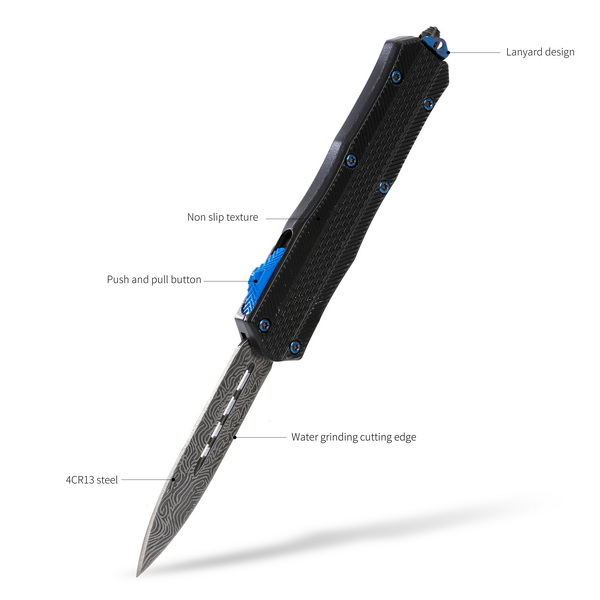
Modern OTF Pocket Knives benefit from improved steels, precise CNC machining, safer locking systems, and more ergonomic handles. These upgrades make the knife smoother to operate, more durable in daily use, and more comfortable to carry and control.
Yes, a well‑designed OTF Pocket Knife with a reliable lock and recessed or protected activation control can be very safe for everyday carry. Users should always follow local laws and basic knife safety practices, such as keeping fingers clear of the blade path and storing the knife in the closed position.
An experienced OEM factory can optimize blade heat treatment, machining tolerances, spring tuning, and assembly procedures. These improvements result in OTF Pocket Knives with consistent deployment, solid lock‑up, and long‑term reliability, even when produced at scale.
Yes, OTF Pocket Knives are ideal for customization through OEM production. Options include custom blade profiles, steel grades, handle shapes, textures, colors, logos, serial numbers, and additional features like glass breakers or special clips to match your brand image and target market.
Focus on a balanced combination of steel quality, deployment mechanism type (single‑action or double‑action), ergonomic handle shape, secure locking system, and attractive yet practical finishes. A design that integrates these factors will provide customers with an OTF Pocket Knife that feels premium, performs reliably, and reflects your brand's values.
[1](https://www.adeptknives.com/blogs/adept-knives/who-invented-pocket-knives-exploring-the-history-and-evolution-of-iconic-designs)
[2](https://bladeops.com/blog/the-history-of-otf-knives-from-military-tool-to-everyday-essential/)
[3](https://swordsswords.com/blog/-otf-automatic-knives-what-were-they-invented-for/)
[4](https://tacknivesusa.com/the-evolution-of-folding-knife-designs/)
[5](https://smkw.com/knife-101-history-of-the-microtech-ultratech-series)
[6](https://www.knafs.com/pages/pocket-knife-history)
[7](https://knife-depot.com/blogs/sharpened-values/history-of-otf-knives-from-mlitary-rigin-to-daily-use)
[8](https://blade-city.com/blogs/gun-knife-blog/the-evolution-of-automatic-switchblade-knives-from-classic-to-modern-designs)
[9](https://www.58hrcknives.com/the-evolution-of-tactical-otf-knives-over-the-past-decade.html)
[10](https://tacknivesusa.com/what-is-an-out-the-front-pocket-knife-its-uses-history-and-benefits/)


