
Views: 222 Author: Leah Publish Time: 2025-10-25 Origin: Site


Content Menu
● Overview of the South Korean OTF Knife Sector
● Leading South Korean Custom OTF Knives Manufacturers and Suppliers
>> Kizuna Precision Co., Ltd. (Seoul)
● What to look for when choosing a Custom OTF Knives Manufacturer in Korea
>> Technical capability and compliance
>> OEM/ODM depth and design support
>> Material sourcing and supply chain stability
>> Quality assurance and certifications
● Practical case studies and real-world examples
● Competitive landscape and notable brand partnerships
● Design considerations for successful OTF products
● Manufacturing considerations for OEM/ODM partnerships
● What buyers should request from a prospective partner
● Examples of real-world brand references and market signals
● FAQ
>> 1. What should I look for in a Custom OTF Knives Manufacturers and Suppliers in Korea?
>> 2. How important is material and coating selection for OTF knives?
>> 3. Can Korean manufacturers handle private-label branding and packaging?
>> 4. What regulatory considerations should be addressed for international sales?
>> 5. How can prototyping reduce risk in OTF knife development?
South Korea's cutlery landscape blends centuries of steelmaking heritage with modern precision manufacturing. In the realm of Out-The-Front (OTF) knives, a niche that demands exacting tolerances, heat treatment expertise, and rigorous quality control, several South Korean manufacturers and contract suppliers stand out for their precision, innovation, and OEM/ODM capabilities. This article surveys top players that excel as custom OTF knives manufacturers and suppliers, highlighting capabilities, notable partnerships, and what buyers should consider when sourcing. The emphasis on Custom OTF Knives Manufacturers and Suppliers reflects the market demand for tailored blade profiles, handle ergonomics, locking mechanisms, and branding options that distinguish private-label products in a crowded field.
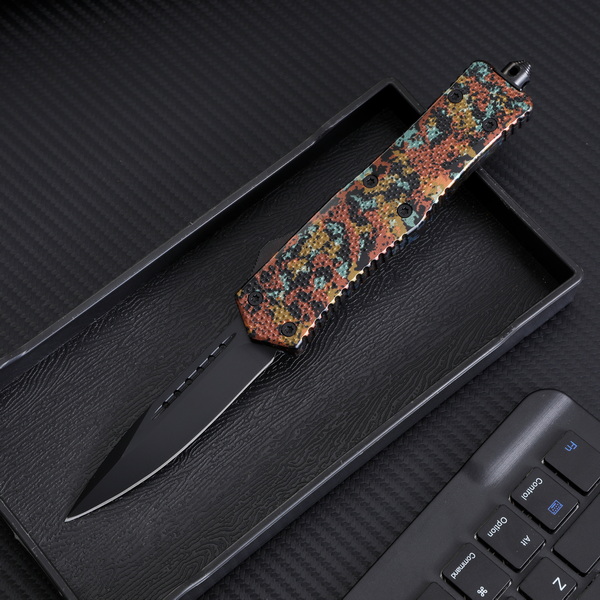
- The South Korean knife industry has matured around a combination of tool steel expertise, CNC precision machining, and surface finishing excellence. Key strengths include consistent batch quality, scalable OEM capabilities, and robust quality management systems suited to international compliance standards. This environment makes South Korea a compelling source for Custom OTF Knives Manufacturers and Suppliers seeking dependable partners for private-label programs.
- Several manufacturers in Korea offer design support, rapid prototyping, and full production services—from raw material selection through final assembly and packaging. Buyers frequently evaluate factors such as hardness and wear resistance of blade steel, edge retention, deployment speed, unlocking safety mechanisms, handle material options, and branding flexibility.
- Core strengths: High-precision CNC machining, heat treatment, and finishing for private-label OTF knives. Offers full ODM services including blade profiling, handle ergonomics, and branding customization.
- Capabilities to consider: standardized QA protocols, model libraries for rapid prototyping, and scalable production lines for pilot-to-mass orders.
- Core strengths: Specialty in metal forming, blade hardening processes, and small-to-midsize OEM runs. Known for reliability in international supply chains and customization of grip textures and coatings.
- Capabilities to consider: steel grade options, coating durability, and packaging customization for brand differentiation.
- Core strengths: Integrated manufacturing for folding and automatic knives, with emphasis on deployment mechanism reliability and safety-lock design.
- Capabilities to consider: regulatory compliance support for international markets, prototype-to-production throughput, and after-sales technical support.
- Core strengths: OEM/ODM partner with design collaboration, tooling for varied blade geometries, and rapid prototyping cycles.
- Capabilities to consider: process transparency, sourcing traceability, and ability to accommodate brand-specific certifications.
- Core strengths: Collaboration with outdoor brands for private-label lines, offering customization in handle materials, finishes, and engraving.
- Capabilities to consider: lead times for large runs, quality assurance documentation, and branding flexibility.
- Ensure the supplier can meet deployment reliability requirements, including consistent automatic deployment speed, secure retraction, and safe lock mechanisms.
- Request documentation on heat treatment processes, surface finishing, and corrosion resistance, to align with product specifications and market expectations.
- A strong partner should offer design assistance, CAD/CAM services, and prototyping cycles to validate prototypes before mass production.
- Evaluate whether the supplier can accommodate branding, packaging, and regulatory labeling requirements across target markets.
- Confirm blade steel options, handle materials, and coating processes (e.g., anodizing, PVD finishes) and their availability for your production timeline.
- Look for QA programs, in-process inspection, final sampling, and traceability for components. Compliance with international standards and local regulations is crucial for global distribution.
- Assess whether the manufacturer can scale from pilot orders to larger runs, and whether they can support evolving product lines without sacrificing on-time delivery.
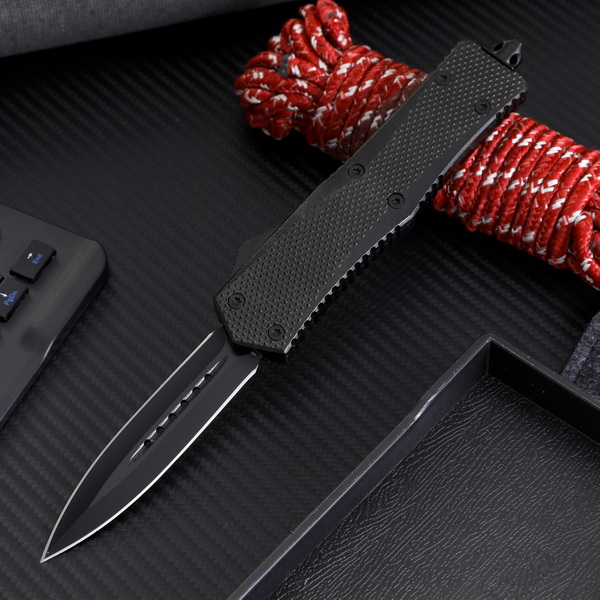
1. Kizuna Precision Co., Ltd. (Seoul) – Private-label OTF lines for outdoor and tactical brands
- Focus: Custom blade finishes, coating options (PVD, black oxide), and ergonomic handle textures. Known for strict QA and packaging customization for international retailers.
2. Daejin Metalworks (Daegu) – ODM for small-to-mid-sized OTF series
- Focus: Blade steel optimization, heat treatment customization, and rapid prototyping to expedite market entry for new models. Emphasizes corrosion resistance and edge retention.
3. Hanwook Knife Tech (Busan) – OEM collaborations with international outdoor brands
- Focus: Deployment mechanism optimization, safety-lock design, and scalable production for private-label lines. Provides regulatory compliance support and technical documentation.
4. Jinwoo Industrial (Jeonju) – Design-led OEM/ODM partner
- Focus: End-to-end product development, from concept sketches to final assembly, including supplier scouting and testing for global distribution. Highlights branding versatility.
- With globalization, South Korean manufacturers frequently collaborate with international brands seeking reliable Custom OTF Knives Manufacturers and Suppliers. Partners may include outdoor retailers, tactical gear companies, and premium knife brands expanding into OTF offerings.
- Many Korean firms operate under ODM/OEM agreements with global brands, enabling private-label manufacturing across diverse markets. Real-world examples include collaborations with outdoor gear distributors and protective-case manufacturers that require tight tolerances and secure supply chains.
- Deployment mechanism and safety: A smooth deployment with a reliable switch and safety lock reduces risk of accidental deployment.
- Ergonomics and handling: Handle geometry affects grip security, fatigue resistance, and controllability in outdoor or tactical use.
- Blade geometry and edge retention: Steel grade, bevel type, and grind influence performance and maintenance needs.
- Aesthetic customization: Finishes, engravings, and color schemes help private-label lines stand out, while branding must align with trademark and regional requirements.
- NPI readiness: Early prototyping and design validation reduce risk, align costs, and streamline regulatory approvals.
- Tooling and capital investment: Determine whether the supplier will invest in specialized tooling or rely on existing tooling for variant lines.
- Intellectual property protection: Ensure NDAs, IP assignments, and secure design-handling procedures to protect brand concepts.
- Technical specifications pack: Blade steel options, hardness targets, coating options, grip materials, and dimensions for a range of sizes.
- Prototype samples: Functional demonstrations of deployment, lock safety, and branding applications.
- Process and QA documentation: In-process inspection reports, third-party test results if available, and final QA certificates.
- Compliance and regulatory data: Documentation on safety standards, export controls, and country-specific labeling requirements.
- Several Korean manufacturers advertise private-label capabilities for knives and folding tools, emphasizing high-precision machining and customized finishes. Direct public marketing by every OTF maker may be limited due to confidentiality in OEM arrangements, but legitimate partnerships with global brands are common in this space.
South Korea hosts a diverse ecosystem of manufacturers and contract partners capable of delivering Custom OTF Knives Manufacturers and Suppliers with high precision, robust design support, and scalable production. Buyers can leverage strong ODM/OEM capabilities, rigorous QA processes, and branding flexibility to build private-label OTF products that compete successfully in global markets. By selecting partners with proven technical expertise, reliable supply chains, and transparent communication, brands can accelerate time-to-market while maintaining consistent quality across extended product lines.
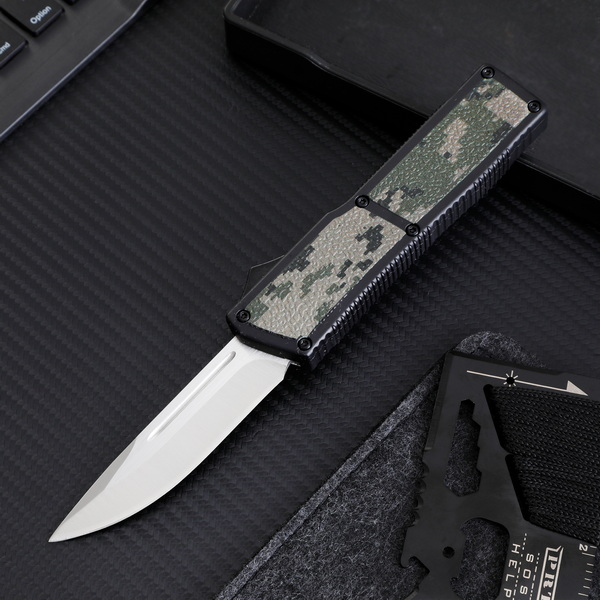
- Look for proven deployment reliability, robust heat treatment knowledge, branding flexibility, and clear QA documentation. Ensure the partner offers ODM support, rapid prototyping, and scalable production to meet market demands.[1][2]
- Material and coating influence edge retention, corrosion resistance, and maintenance requirements, which are critical for outdoor and tactical use. Confirm steel grades, heat treatment standards, and coating durability with the supplier.[2][3]
- Yes, many OEM/ODM partners in Korea provide branding options, custom engravings, color finishes, and customized packaging to align with brand identities.[3][1]
- Ensure compliance with export controls, labeling requirements, and any regional restrictions for deployment mechanisms. Request documentation and third-party test results as needed.[1][2]
- Prototyping validates design concepts, allows early testing of deployment and safety features, and helps refine tolerances before mass production, reducing costly rework.[2][1]
[1](https://www.linkedin.com/pulse/south-korea-outdoor-adventure-tool-knife-market-report-ptzpe)
[2](https://www.tacticalsportinggoods.com/blogs/news/ultimate-guide-to-the-top-10-otf-knives-of-2025-features-reviews-and-recommendations)
[3](https://www.accretech.com/en/assets/companyprofile_2025_E.pdf)
[4](https://waterweco.com/en/)
[5](https://www.struers.com)
[6](https://www.mckinsey.com/kr/~/media/mckinsey/locations/asia/korea/our%20insights/koreas%20next%20s%20curve%20a%20new%20economic%20growth%20model%20for%202040/koreas-next-s-curve-a-new-economic-growth-model-for-2040.pdf)
[7](https://www.autodesk.com/customer-stories/case-studies)


