
Views: 222 Author: Leah Publish Time: 2025-11-07 Origin: Site


Content Menu
● Introduction: The Rise of Tactical OTF Knives
● Anatomy of a Tactical OTF Knife
>> Handle
>> Blade
● The Internal Mechanism: Precision Engineering in Action
>> Blade Carrier and Track Assembly
● Technical Specifications: What Sets Tactical OTF Knives Apart
● Materials and Construction: Built for the Field
>> Blade Steels
● Tactical Advantages and Use Cases
>> Versatility
● Types and Variations: Finding Your Tactical Match
● Safety, Regulation, and Responsible Ownership
● Maintenance and Longevity: Caring for Your Tactical OTF Knife
>> Cleaning
>> Storage
● Common Myths and Misconceptions About Tactical OTF Knives
● The Future of Tactical OTF Knives: Innovation and Evolution
● FAQs
>> 1. What makes a tactical OTF knife superior to traditional folding knives?
>> 2. How do I choose between single-action and double-action OTF knives?
>> 3. Is regular maintenance really necessary?
>> 4. Are tactical OTF knives legal everywhere?
>> 5. What features should I look for in a high-quality tactical OTF knife?
Tactical OTF (Out-the-Front) knives have transformed the world of edged tools, offering unprecedented speed, safety, and mechanical sophistication for professionals and enthusiasts alike. With a lineage rooted in military, law enforcement, and survival applications, these knives are engineered for performance and reliability even in extreme conditions. This comprehensive guide delves deep into the internal mechanics, materials, usage scenarios, technical distinctions, and the future of Tactical OTF Knives, solidifying their status as the go-to tool for serious users worldwide.[3][8]
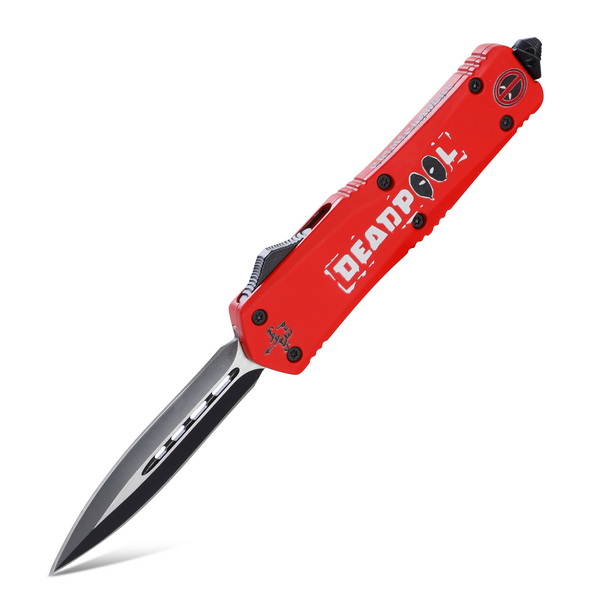
Tactical OTF knives are defined by their signature mechanism: the blade deploys and retracts straight out from the handle with the press of a button or slider, all in a linear motion. This swift, one-handed operation is valued in emergency, self-defense, and utility scenarios where every second matters. Unlike traditional folding knives, tactical OTF knives provide immediate access to the blade without awkward repositioning, enhancing their tactical utility and ease of use.[10][11][12][3]
The handle of a tactical OTF knife is more than just a housing for the blade; it's a central structural element made from premium materials such as aircraft-grade aluminum, titanium, zinc alloy, or reinforced polymers for maximum durability and corrosion resistance. For enhanced grip, handles often feature textured or rubberized surfaces and finger grooves, ensuring a secure hold in any environment.[4][5][3]
Tactical OTF knives utilize high-performance steels including D2, 440C, AUS-8, and specialized carbon steels. These materials are chosen for edge retention, resistance to wear and corrosion, and resilience under heavy use. Blade lengths typically range from 3 to 4.25 inches, with shapes—including dagger, tanto, and drop point—tailored for piercing, slicing, or general-purpose tasks.[1][5][6][7][8][3]
At the heart of every tactical OTF knife is its deployment and retraction mechanism. This typically involves a coil spring system under tension, a blade carrier riding in machined steel tracks, and a robust locking system to ensure the blade remains secure when open or closed. The activation switch—a button or thumb slide—releases the stored spring energy, propelling the blade or retracting it at lightning speed.[8][3]
Modern tactical OTF knives are equipped with multiple safety features including mechanical or ball-bearing locks, safety switches to prevent accidental engagement, and lock-out systems that halt blade extension if obstructed. Many models also include glass breakers and reversible, deep-carry pocket clips for added tactical value.[7][13][3]
The power behind the tactical OTF knife's blade movement lies in a coiled high-carbon steel spring tightly compressed within the handle. When the activation button or slide is engaged, the spring's stored energy is released, pushing the blade carrier forward through polished internal tracks. Quality springs are engineered for thousands of cycles and maintain reliable tension under repeated use.[8]
The blade is mounted on a carrier that glides within laser-etched, precisely machined tracks inside the handle. These tracks guide the blade during deployment and retraction, minimizing wobble and friction for smooth operation. Superior OTF knives employ high-tolerance engineering to eliminate any play and ensure consistent performance.[5][8]
After deployment, the blade carrier engages with high-strength mechanical locks, sometimes assisted by ball bearings. These locks prevent accidental closure and guarantee blade stability during heavy-duty use. Some tactical OTF knives also feature a double-action system, allowing both deployment and retraction to be performed with a single movement of the switch, while single-action knives require manual retraction.[3][8]
- Blade Length: 3–4.25 inches for optimal legal compliance and usability.[5][7][8]
- Blade Steel: D2, 440C, 3Cr13, AUS-8, and others for retention and durability.[6][1][7][3]
- Handle Materials: Aircraft aluminum, G10, steel, zinc alloy, carbon fiber insets for strength and lightness.[7][3][5]
- Weight: Typically between 100–200 grams for balance and comfort.[6][5]
- Deployment: Single-action (automatic open, manual close) or double-action (automatic open and close).[3][6][8]
- Extras: Safety switches, glass breakers, reversible clips, MOLLE-compatible sheaths, non-reflective coatings.[2][7][3]
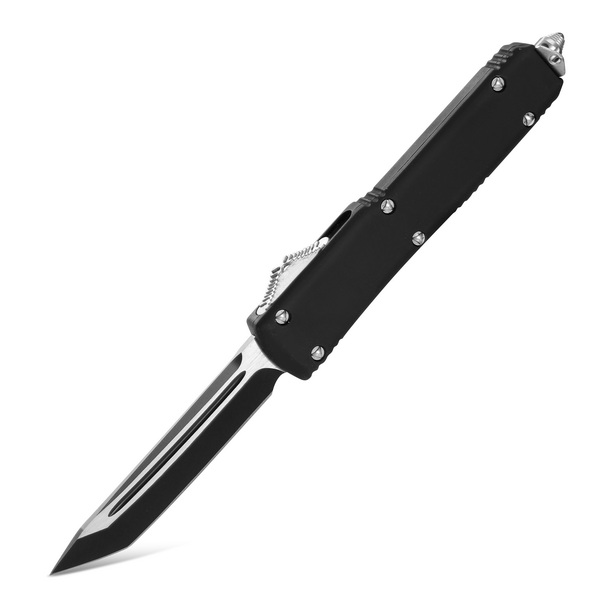
- D2 Steel: Outstanding wear resistance, excellent for tactical applications due to toughness and edge stability.[9][1][5]
- 440C Stainless: Corrosion resistance, affordable and easy to maintain, good edge retention.[3]
- AUS-8: Japanese stainless steel, balances sharpness and toughness.[6]
- 3Cr13 Stainless: Common in affordable models, good hardness and corrosion resistance for EDC.[7]
Quality is not just in the blade. Handles are crafted from:
- 6061-T6 Aircraft Aluminum: Lightweight, anodized for corrosion resistance, strong yet comfortable.[4][5]
- G10: Glass fiber composite, ultra-tough and grippy even when wet.[5]
- Zinc Alloy with Rubberized Finish: Durable with a secure, slip-free feel.[3]
- Carbon Fiber Insets: Added strength and style with reduced overall weight.[7]
The defining tactical edge of OTF knives is their immediate, one-handed blade deployment. In life-or-death situations or time-critical tasks, this speed can be the difference between safety and disaster.[11][12]
Tactical OTF knives are more than weapons; their design lends itself to everyday carry, wilderness survival, rescue operations, and general utility among outdoor professionals, first responders, and military personnel.[10][3]
With features like safety switches, non-slip handles, and premium lockup mechanisms, these knives minimize the risk of accidental blade engagement—even when operated under stress or with gloved hands.[13][3]
Many tactical OTF knives include hardened glass breakers or seatbelt cutters, making them ideal for vehicle or wilderness emergencies.[7][3]
- Deploys automatically but requires manual reset to retract the blade.
- Fewer moving parts, typically lower cost, slightly easier to maintain.
- More reliable in extreme conditions due to mechanical simplicity.[8]
- Both deployment and retraction are automatic, operated by a single thumb slide or switch.
- Maximizes convenience, especially useful in tactical and rapid-response scenarios.
- Mechanically complex, requiring meticulous engineering and maintenance.[6][8][3]
- Dagger and spear-point for piercing and tactical engagement.
- Tanto for superior tip strength.
- Drop-point and clip-point for general utility.[5][7]
- Coatings include black oxide, two-tone finishes, mirror-polishing for visual appeal and stealth.[3][7]
Tactical OTF knives are powerful tools, but owners must respect local regulations and proper usage:
- Legal Restrictions: Blade length, action type, and carry laws vary by region. Some areas ban automatic knives or limit blade length—always research legal parameters before purchase or carry.[12][2][3]
- Safe Handling: Engage safety switches during storage, use the provided sheath, and keep out of reach of children.[2][7]
- Responsible Usage: Never wield a tactical knife irresponsibly or in a threatening manner. They are designed for utility, personal safety, and professional applications.
- Periodic disassembly (where permitted by the manufacturer) to remove debris and lubricate the spring and track system ensures smooth action.[14][5]
- Wipe the blade clean and dry after use, especially when exposed to salt, blood, or moisture.
- Use fine grit sharpening stones or diamond sharpeners to keep the edge ready for precision work.
- Inspect the deployment mechanism and locks regularly for wear and tightness.
- Store in a cool, dry place within its sheath to prevent oxidation and accidental damage, especially for carbon steel and non-coated blades.[14]
- “OTF knives are dangerous and unsafe”: Modern tactical OTF knives are among the safest, thanks to sophisticated locking and safety systems.[13]
- “OTF knives are illegal everywhere”: Regulations differ sharply by country, state, and city. Legal with proper understanding.[12][2]
- “OTF knives are only for combat”: Their versatility extends far beyond the battlefield, serving as essential tools for emergency, survival, and everyday applications.[10][7]
- “OTF knives fail under pressure”: High-end models undergo rigorous torture testing and premium material selection for maximum reliability.[3]
Today's tactical OTF knives represent only the beginning of the category's potential. With continuous improvement in metallurgy, mechanical engineering, and safety technology, future OTF knives are expected to feature lighter handles, more corrosion-proof coatings, enhanced spring mechanisms, and even integration with smart technology for military and professional applications. As demand grows among civilians, law enforcement, and emergency responders, more accessible and user-friendly designs will emerge, solidifying the tactical OTF knife as a staple of modern preparedness.
Tactical OTF knives are marvels of design, fusing mechanical innovation, reliable performance, and high-quality materials to meet the demands of serious users worldwide. Their unique mechanism, rapid deployment, and advanced safety features make them essential tools for situations that demand speed and certainty. By understanding the intricate workings, materials, and advantages of tactical OTF knives, users can select, maintain, and operate these exceptional tools with confidence, making them invaluable companions for military, law enforcement, rescue professionals, and outdoor adventurers alike.[8][3]
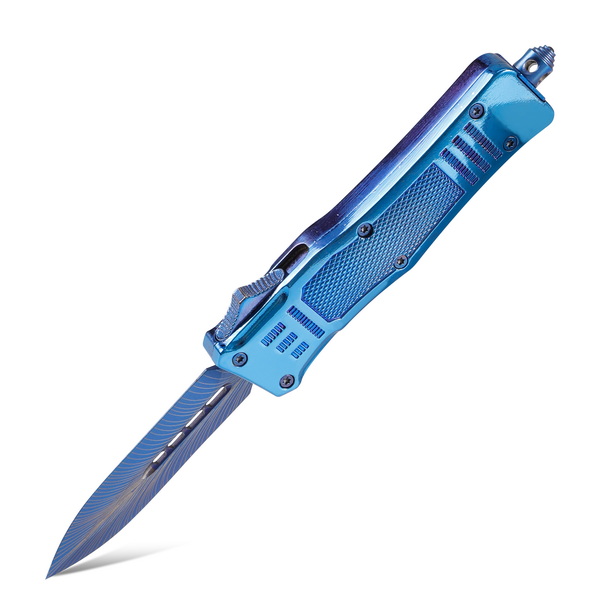
The primary benefit is instant, one-handed deployment directly out the handle, which is crucial for emergencies and tactical use where speed and accessibility matter most.[11][8]
Single-action OTF knives are simpler and easier to maintain, while double-action models enable both deployment and retraction with one switch, offering greater convenience for professional use.[6][8][3]
Yes. Regular cleaning, lubrication, and inspection keep the blade deploying smoothly and prevent premature wear or malfunction—most OTF knives are engineered for easy disassembly and care.[14][5]
No. Laws vary regarding blade length, automatic operation, and carry restrictions. Always research your local laws before purchasing or carrying a tactical OTF knife to remain compliant.[2][3]
Look for premium blade steel for edge retention, a strong and lightweight handle, a robust locking mechanism, advanced safety features, and user-friendly controls.[5][7][3]
[1](https://www.benchmade.com/products/5370fe-shootout-otf)
[2](https://www.trueswords.com/Armed-Force-Tactical-Non-Reflective-Automatic-OTF--51801/51801.html)
[3](https://ravencresttactical.com/product-category/otf-knives/)
[4](https://conquesttactical.com/knife-specifications/)
[5](https://core15rifles.com/krate-tactical-otf-knife-the-sandstorm/)
[6](https://store.smith-wesson.com/tactical/knives/smith-wesson-swotf9b-assist-opening-otf/SWOTF9B.html)
[7](https://www.budk.com/USA-Tactical-Black-OTF-Automatic-Knife-And-Belt-Sh-51255/51255.html)
[8](https://knife-depot.com/blogs/sharpened-values/otf-knives-explained-the-complete-guide)
[9](https://kratetactical.com/shop/trump-47-otf-knife/)
[10](https://ravencresttactical.com/otf-tactical-knives-advantages-and-uses/)
[11](https://bladeops.com/blog/the-advantages-and-disadvantages-of-otf-knives-in-tactical-settings/)
[12](https://crateclub.com/blogs/loadout/are-otf-knives-good-for-self-defense-a-comprehensive-analysis)
[13](https://nobliecustomknives.com/what-is-an-otf-knife-and-how-does-an-otf-knife-work/)
[14](https://ravencresttactical.com/otf-knife-care-maintenance-taking-apart-cleaning-otf-knife/)


