
Views: 222 Author: Leah Publish Time: 2025-11-06 Origin: Site


Content Menu
● The Tactical Edge: OTF Knife Fundamentals
● Common Handle Materials for Tactical OTF Knives
>> Aluminum
>> Zinc Alloy
>> Steel
>> Titanium
>> Carbon Fiber
>> Micarta
>> Modern Synthetics and Coatings
>> Decorative and Natural Options
● Comparing Materials: Durability, Weight, and Grip
● Ergonomics and Design Features
● Handle Material's Role in Tactical Scenarios
>> Law Enforcement and Military
>> EDC (Everyday Carry) and Rescue
● Customization and Aesthetics
● Advantages and Disadvantages Summarized
>> Advantages:
● FAQ
>> 1. What is the ideal handle material for tactical OTF knives?
>> 2. Does weight affect the performance of a tactical OTF knife?
>> 3. Why is grip texture so important for tactical OTF knives?
>> 4. How are handle materials maintained for longevity?
>> 5. Are custom overlays like G10 or Micarta better than full metal handles?
Tactical OTF Knives—Out-the-Front knives—represent a pinnacle of modern knife design, providing users with immediate blade deployment, precision, and reliability needed in complex or high-stress environments. For military professionals, law enforcement officers, first responders, outdoor adventurers, and knife collectors, a tactical OTF knife's handle is not merely an aesthetic choice but a critical element impacting performance, durability, and comfort.
Understanding the varied materials and design philosophies behind Tactical OTF knives' handles is essential for anyone seeking quality, longevity, and operational safety. This comprehensive guide explores the most commonly used handle materials, their unique benefits, drawbacks, and suitability for tactical applications, helping you choose the ideal solution for your needs.
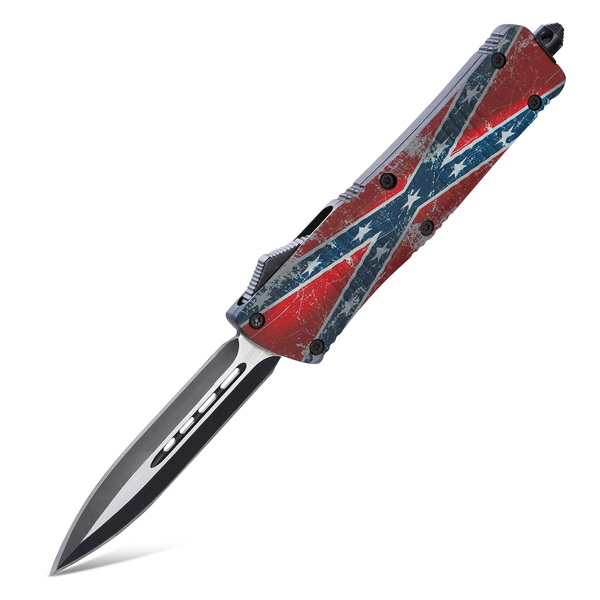
Tactical OTF knives—named for their distinctive mechanism allowing the blade to slide out from the front of the handle at the press of a button—offer fast, one-handed deployment with either single-action or reversible double-action systems. These knives are engineered to function reliably despite shocks, environmental exposure, or rapid cycling, making their handle composition a foundational consideration.
Handles on Tactical OTF knives must:
- Safeguard the internal mechanisms against drops or impacts.
- Facilitate secure grip in adverse conditions, even while wearing gloves.
- Provide lightweight performance without compromising strength.
- Resist environmental hazards like corrosion, cold, or moisture.
In a tactical setting, handle material shapes the knife's overall portability, grip security, comfort, and resilience. Every material offers a distinct blend of characteristics, cost factors, and practical realities. The choice influences not just tactile sensation but also long-term use, safety, and personal style preferences.
Aircraft-grade aluminum—typically T6061 or better—remains the standard bearer among tactical OTF knives. Favored for its balance of structural strength, lightweight nature, and corrosion resistance, aluminum also accepts anodizing for color, hardness, and surface texture.
Benefits include:
- Dropdown weight for easy everyday carry.
- Solid rigidity to protect mechanisms.
- Surface can be knurled, textured, or milled for non-slip grip.
- Excellent resistance to corrosion when anodized.
Drawbacks to aluminum revolve around its potential to feel cold or slippery when smooth, and its tendency to pick up scratches more easily than steel or titanium. Users in extreme climates often seek models with grip overlays or textured finishes to counter temperature conductivity and grip concerns.
Zinc alloy is prized for affordability and processability, commonly manufactured by die casting—injecting molten metal into molds at high pressure for tight tolerances and lower production costs. While capable of offering sufficient toughness and corrosion protection, zinc alloy is heavier than aluminum and cannot be anodized. Its presence in tactical OTF knives is most pronounced in value-focused models.
- Best for low-production cost and sturdy construction.
- Weight is a concern for those seeking ultra-light EDC tools.
- Surface is typically painted or coated rather than anodized.
Some tactical OTF knives employ steel, typically as part of a composite handle design or in the construction of hardware like screws, clips, or liners. Stainless steel, in particular, resists dents, scratches, and stains, lending a substantial feel. However, the extra weight and higher cost typically limit full-steel handles to specialty or collector pieces.
Advantages include:
- Extreme toughness and resistance to daily wear.
- Maintains appearance over time.
- Reliable, heavy feel for those preferring robust knives.
Challenges come from increased weight, greater susceptibility to cold, and less flexibility in surface coloration and customization compared to aluminum or synthetics.
Titanium is used primarily in premium tactical OTF knives for its remarkable strength-to-weight ratio, natural corrosion resistance, and its visually appealing ability to be anodized in vibrant colors. It is extremely tough yet light, offering a solid, warm feel in hand, and naturally resists a wide array of environmental hazards.
- Lightweight but durable, sometimes as liners or clips.
- Virtually impervious to corrosion.
- Often commands a high price due to raw material cost and machining difficulty.
While full titanium handles are rare, their use signals top-tier offerings meant for demanding users who prioritize both luxury and unstinting durability.
Carbon fiber lends a technical, lightweight edge to tactical OTF knives either as a primary handle material or as decorative inlays. Its low density and high tensile strength make it attractive, though true carbon fiber can be prone to shattering under severe impact.
- Signature look and ultralight performance.
- Good grip when textured or woven in panels.
- Typically reserved for accenting aluminum frames rather than stand-alone handles due to brittleness.
G10 is a glass-epoxy composite laminate known for its exceptional grip, wide color selection, and impact resistance. It is widely employed for overlays and grip sections on tactical OTF knives but is less common as a full handle due to the structural requirements of OTF mechanisms.
- Outstanding grip even when wet.
- Lightweight and cost-effective.
- Vulnerable to impacts; may chip in severe conditions.
G10 handles, when used as overlays, add serious ergonomic benefit, and unique styling without undermining the primary frame's integrity.
Micarta, made by binding layers of fabric in resin under heat and pressure, offers a classic, tactile grip with an organic feel. It develops a unique patina over time and retains texture even in slick or wet conditions—a boon for bushcraft knives and outdoor use.
- Warm in hand, strong grip.
- Lightweight and visually unique.
- Can absorb moisture and wear down with heavy use.
Micarta's old-school charm and consistently reliable grip have made it popular among traditionalists and tactical users alike.
Thermoplastics like acrylic, Grivory, or Valox, ceramic coatings like Cerakote, and rubberized surfaces expand ergonomic and stylistic possibilities. These are typically layered onto metal frames for improved grip, insulation, chemical resistance, and decorative flair.
- Polymer overlays insulate grip from cold.
- Cerakote increases scratch and corrosion resistance while offering countless colors.
- Rubber improves wet grip but may degrade with exposure over time.
Wood and bone were historically favored for knife handles but seldom appear on modern tactical OTF knives outside custom or collector pieces, as they lack the impact and weather resistance demanded by hard operational use.
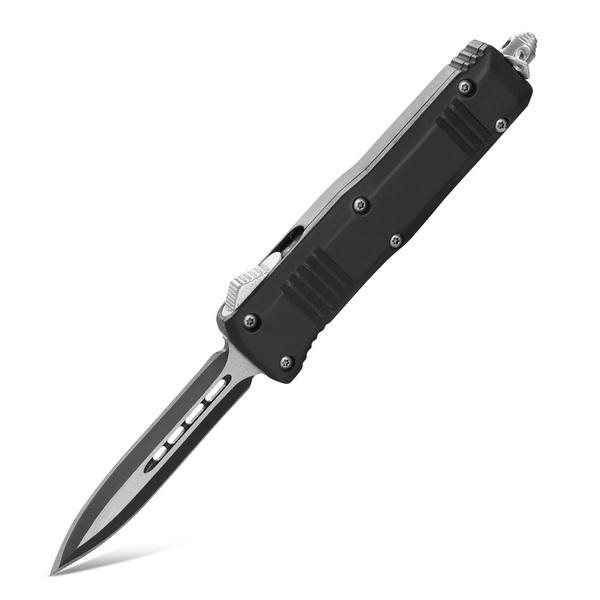
Each handle material offers a unique blend of benefits and tradeoffs:
- Aluminum—Optimal for most users, balancing lightness and strength.
- Zinc Alloy—Best for cost-conscious buyers, but heavier.
- Steel—Sturdy and robust, ideal for collectors or those needing bulletproof reliability at the price of weight.
- Titanium—Premium, light, and durable, but expensive.
- Carbon Fiber—Distinctive and lightweight, fragile against hard impact.
- G10 and Micarta—Excellent grip, comfort, insulation, typically as overlays not main handles.
- Modern Synthetics—Customizable for grip and aesthetics, ideal for wet or cold climates.
Tactical OTF knives often feature chamfered edges, palm swells, finger grooves, and textured sections to maximize grip security and comfort, critical for quick deployment in high-stress situations. Many models offer ambidextrous slider or button systems, ensuring accessibility for left- and right-handed users. The best designs consider both bare hand and glove operation, surface temperature insulation, and cleanability.
Aluminum and titanium are most favored where strength, stealth, and instant readiness matter. Textured surfaces and anodized finishes allow fast, reliable use with or without gloves, while durability ensures survival through impacts, weather, and heavy handling.
Grip overlays and G10 composite sections are common, helping prevent slips in wet, cold, or muddy conditions. Thermoplastic coatings and Cerakote also safeguard against elemental damage and make cleaning easier.
Weight is especially vital for users needing comfort for all-day carry. Aluminum frames with synthetic or rubberized inserts strike an ideal balance for rescue, EMT, or utility users who may rely on their Tactical OTF knives repeatedly in unpredictable installations—urban or wild.
Modern manufacturing allows extensive customization of Tactical OTF knives. Anodized aluminum can appear in nearly any color; overlays of G10, carbon fiber, or thermoplastics introduce patterns, logos, and personal branding. Even Cerakote can be used to add camo patterns or extreme visual contrasts. These options achieve not only utility but reflect the owner's style and professional identity.
Proper maintenance extends the life of Tactical OTF knives, preserving their appearance and reliability. Basic handling protocols:
- Wipe down knife regularly, removing dirt, sweat, and moisture.
- Use mild soap for cleaning, avoid harsh solvents, especially on coated or composite sections.
- Dry thoroughly, especially around overlays and inlays.
- Lubricate the deployment mechanism as recommended, being careful with synthetic inserts.
- Store in a protective sheath if not in use, out of direct sunlight or extreme humidity.
Although the focus is handle materials, tactical OTF knives pair these with advanced blade steels—CPM S30V, M390, D2, AUS-8, 440C, or VG-10—delivering exceptional edge retention, corrosion resistance, and deployment reliability. Together with sturdy handles, these steels make Tactical OTF knives indispensable for professionals and enthusiasts.[4][5]
- Lightweight and durable construction (aluminum, titanium, carbon fiber).
- Textured grip for safety in any condition (G10, Micarta, thermoplastics).
- Corrosion, chemical, and wear resistance for field performance.
- Customizable finishes and ergonomic shaping.
- Reliable deployment thanks to rigid handles protecting mechanisms.
- Cheaper alloys add weight and may feel less premium (zinc, stainless).
- Synthetics and overlays may chip, crack, or wear faster.
- Full metal handles may get cold/hot without insulating layers.
- Decorative materials degrade faster under stress.
- Higher-end materials increase cost (titanium, carbon fiber).
Selecting the right handle material for a tactical OTF knife is a blend of science, craftsmanship, and personal preference. The handle affects every aspect of performance—grip, safety, comfort, weight, corrosion resistance, and longevity. Aluminum, titanium, G10, carbon fiber, and modern synthetics all have distinct strengths for users in varied situations. By understanding each material's properties and matching your requirements for durability, ergonomics, and maintenance, you can choose a tactical OTF knife that helps you perform at your best, no matter what the mission demands.
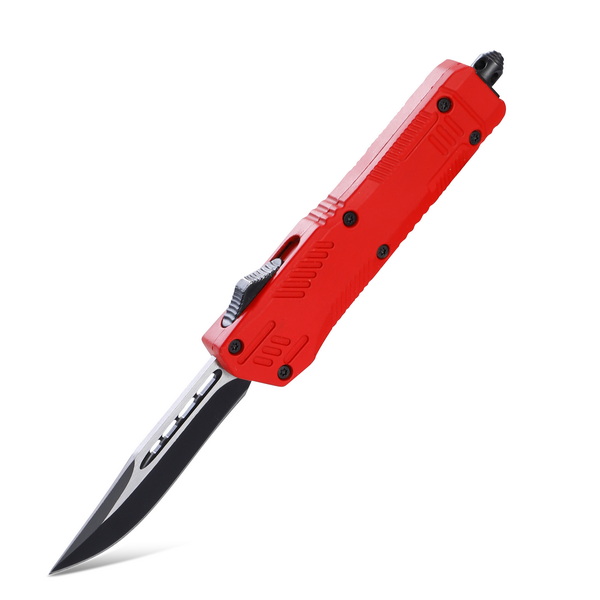
Aluminum is generally the best choice due to its balance of durability, lightness, and corrosion resistance. It allows for knurling, anodizing, and comfortable contoured grips that work in any operational environment.
Yes, weight is crucial—lighter knives enable quicker, fatigue-free deployment and easier daily carry, with aluminum, titanium, and carbon fiber providing optimal performance.
Tactile surfaces, overlays, and knurling prevent slippage in stressful, wet, or gloved conditions, directly improving safety, effectiveness, and confidence for the user.
Routine cleaning with a damp cloth and mild soap, thorough drying, and proper storage are vital. Regular lubrication of moving mechanisms helps, and harsh chemicals should be avoided.
Overlays significantly improve grip and comfort, especially in adverse conditions, but should be paired with a strong primary frame for the structural demands of OTF knives.
[1](https://www.vosteed.com/blogs/guides/choosing-perfect-knife-handle-materials)
[2](https://tacknivesusa.com/a-guide-to-different-types-of-otf-knife-handles/)
[3](https://theknifeconnection.com/blog/a-guide-to-the-different-knife-handle-materials/)
[4](https://www.58hrcknives.com/best-materials-for-otf-knife-blades-a-quick-guide.html)
[5](https://bladeops.com/blog/the-advantages-and-disadvantages-of-otf-knives-in-tactical-settings/)
[6](https://eknives.com/blog/everything-you-need-about-knife-handles)
[7](https://ravencresttactical.com/how-to-choose-the-perfect-tactical-knife-a-comprehensive-guide/)
[8](https://www.bladehq.com/blog/knife-handle-materials-guide)
[9](https://www.hxoutdoors.com/blogs/knife-knowledge/handle-materials)
[10](https://hiconsumption.com/gear/best-otf-knives/)


